


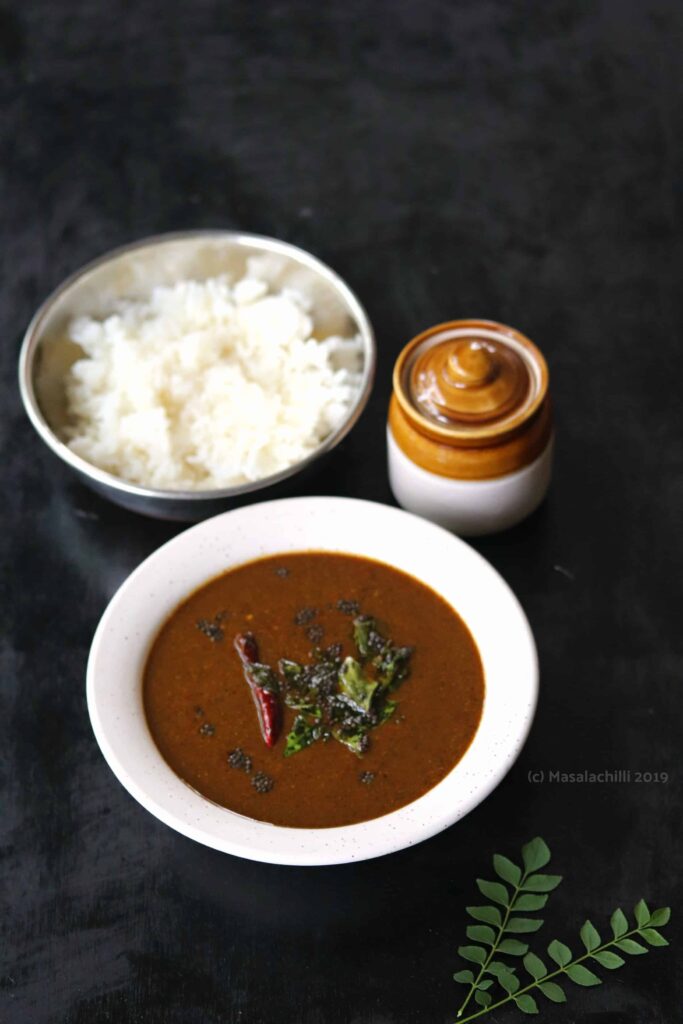
Earlier last month, I was down with flu and a bad chest congestion. I was unable to recover for more than 2 weeks and that is when the husband suggested I make his mother's antidote for cold and cough - MILAGU KUZHAMBU.
About Milagu Kuzhambu
- Milagu Kuzhambu is a No Onion No Garlic South Indian Pepper Gravy. The Pepper in the recipe refers to "Black Peppercorns".
- Kuzhambu is a broth made with tamarind and a blend of spices. The consistency of a Kuzhambu is thick, thin or medium depending on the recipe.
- It is popularly made in South Indian homes especially on 2 occasions - During cold, cough and congestion and as Post Partum Food to be mixed with Rice and Garlic for quick healing and lactation.
- Unlike Sambar or Rasam (tamarind based gravies or broth), Milagu Kuzhambu cannot be consumed in large quantities.
- A limited portion (one ladle), over hot rice, some ghee and sutta appalam (roasted papad) for that instant relief from blocked nose and chest congestion.
- The recipe does not use a lot of oil either, is made only in small quantity and can be refrigerated, heated and eaten for the next couple of days (similar to Vethal Kuzhambu).


I am a big fan of home remedies, especially when they are tasty, comforting treats like Jeera Milagu Rasam (another great home remedy for blocked nose and sinus) and Milagu Kuzhambu.
Growing up, my husband was often prone to cold and chest congestion due to allergies or minor seasonal changes. His mom always made a batch of Milagu Kuzhambu and served it with rice and ghee.
Needless to say, this is my MIL's recipe, passed on to me by the husband, post marriage.
Step by Step Recipe to Make Milagu Kuzhambu at home
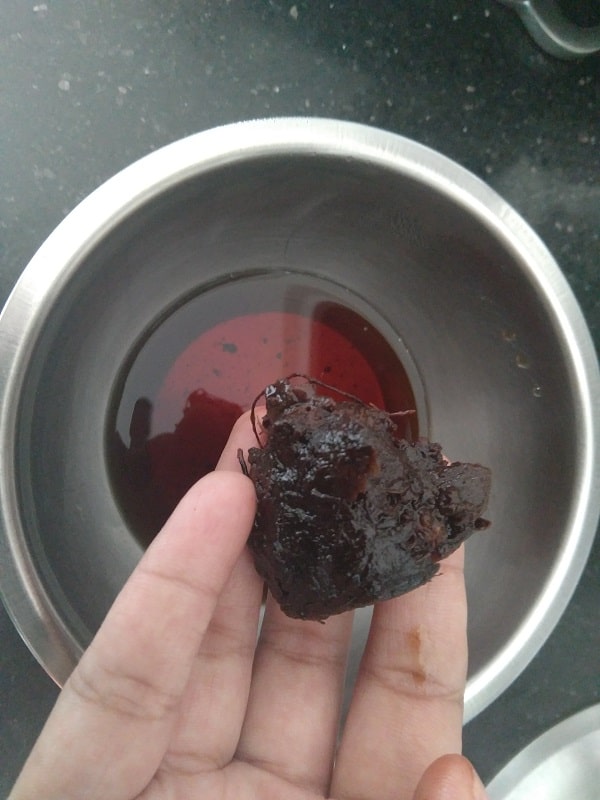
- Soak a Lemon Size Tamarind ball with 1 cup (250ml) hot water. Let it rest for 15 minutes.
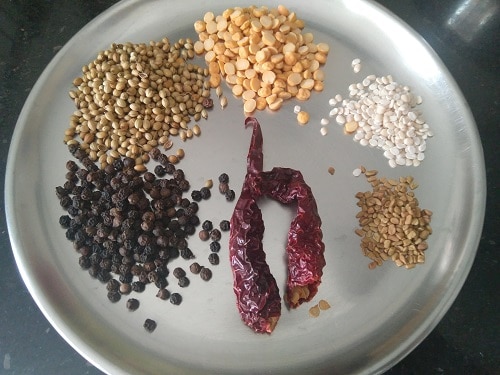
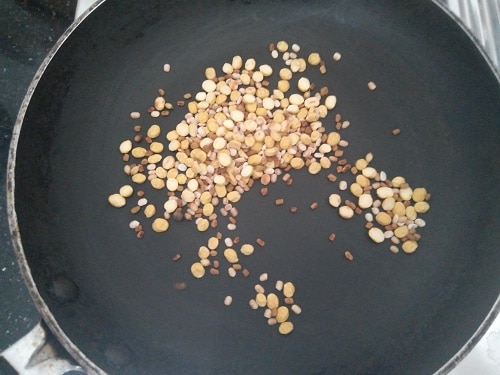
- In the meanwhile, heat a pan, add 1/2 tsp oil and roast Chana Dal, Urad dal and methi seeds until the dals have turned golden brown. Keep this aside for cooling.
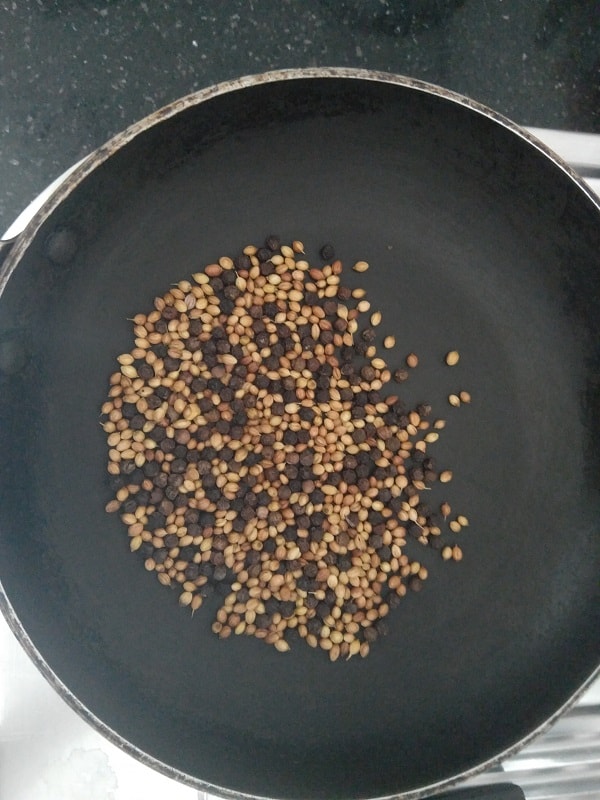
- In the same pan, dry roast coriander seeds and peppercorns until you get a lovely aroma.
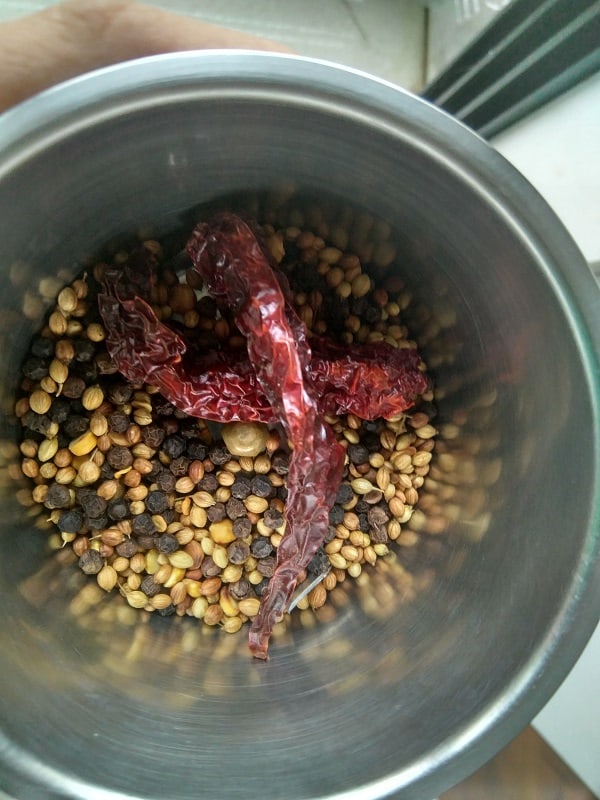
- Now, in the same pan, roast the whole red chillies with few drops of oil and set aside for cooling.
- Until the above masala mixture cools, let us extract the tamarind pulp / juice.
- Sqeeze out the pulp in a vessel, add some more water (1 cup) to squeeze out the balance pulp from the tamarind.
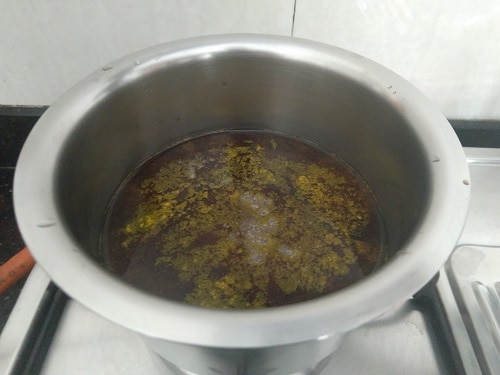
- Cook this tamarind pulp with 1/2 tsp Turmeric powder, a pinch of asafoetida powder and salt to taste.
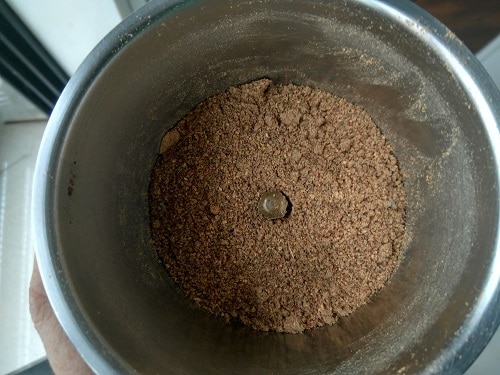
- In the meanwhile, grind the kuzhambu masala powder that was set aside for cooling.
- The tamarind pulp would take about 10 to 15 minutes to reduce on low flame.
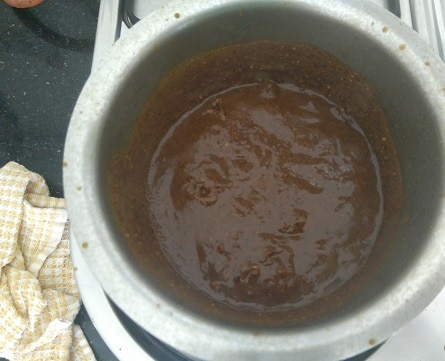
- After the pulp has cooked and reduced with no raw smell, add the ground coarse powder to the simmering tamarind mixture. Mix well.
- Add some jaggery to reduce both heat and tanginess from the tamarind.
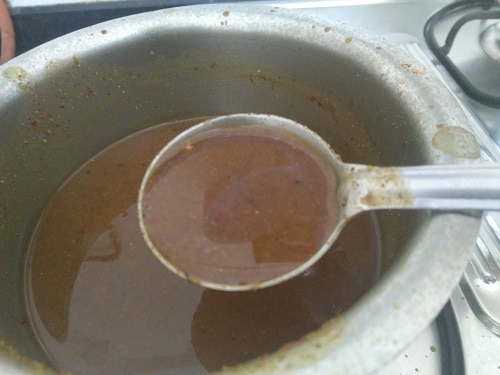
- Allow it to simmer and add some water to adjust consistency. Check salt again, and add more if required.
- Switch off the flame and prepare for tempering.
- Heat a tempering pan, add 2 tsp sesame oil, mustard seeds and curry leaves. Pour the tempering over the Kuzhambu and serve piping hot.



Side dish or accompaniments that pair well with Milagu Kuzhambu are a simple poriyal or Thoran. Try the Beetroot Thoran or Achinga Payaru Thoran.


Milagu Kuzhambu (No Onion No Garlic South Indian Pepper Gravy)
Ingredients
- 1 no Lemon Size Ball of Tamarind I have used dark variety of seedless tamarind here
- 2 1/2 cups Water 1 cup for soaking the tamarind + 1 cup for extracting more pulp + 1/2 cup to adjust consistency as required
- 1/2 tsp Turmeric Powder
- 2 1/2 tsp Oil 1/2 tsp for Roasting the Spices and 2 tsps for tempering
- 1 pinch Asafoetida or hing skip this ingredient for gluten free recipe
- 2 tsp Jaggery Read Notes below
- salt to taste
- FOR THE KUZHAMBU PODI
- 1 tbsp Peppercorns or Kali Mirch
- 1 tbsp Coriander Seeds or Dhania
- 1/2 tbsp Chana Dal
- 1 tsp Urad Dal
- 1/2 tsp Methi Seeds You can add 1/4 seeds if you feel it is too much
- 2 nos Whole Red Chillies Beydgi Chillies used here. Skip if you feel peppercorns would be spicy enough or adjust quantity accordingly.
Instructions
- Soak a Lemon Size Tamarind ball with 1 cup (250ml) hot water. Let it rest for 15 minutes.
- In the meanwhile, heat a pan, add 1/2 tsp oil and roast Chana Dal, Urad dal and methi seeds until the dals have turned golden brown.
- Keep this aside for cooling. In the same pan, dry roast coriander seeds and peppercorns until you get a lovely aroma.
- Now, in the same pan, roast the whole red chillies with few drops of oil and set aside for cooling.
- Until the above masala mixture cools, let us extract the tamarind pulp / juice. Sqeeze out the pulp in a vessel, add some more water (1 cup) to squeeze out the balance pulp from the tamarind.
- Cook this tamarind pulp with 1/2 tsp Turmeric powder, a pinch of asafoetida powder and salt to taste.
- In the meanwhile, grind the kuzhambu masala powder that was set aside for cooling.
- The tamarind pulp would take about 10 to 15 minutes to reduce on low flame.After the pulp has cooked and reduced with no raw smell, add the ground coarse powder to the simmering tamarind mixture.
- Mix well. Add some jaggery to reduce both heat and tanginess from the tamarind. Allow it to simmer and add some water to adjust consistency.
- Check salt again, and add more if required. Switch off the flame and prepare for tempering.
- Heat a tempering pan, add 2 tsp sesame oil, mustard seeds and curry leaves. Pour the tempering over the Kuzhambu and serve piping hot.
Notes
- You can skip red chillies. I have added it for both the deep golden brown colour and taste.
- Do not reduce the quantity of peppercorns used, especially if you are under the weather.
- You can add ghee while tempering. I have avoided it since I added a dollop on rice while serving.
- The Kuzhambu stays good in the refrigerator for over 5 days. The taste gets better each day. You can easily make a big batch.
- Jaggery is added to most tamarind based kuzhambu recipes. It cuts the tanginess and balances the heat. Do not skip it. Also, it is ideal to taste the Kuzhambu and add jaggery quantity accordingly. The quality of tamarind and jaggery both differ. You might need more or less according to your preference.
Loving the Recipes shared by us? Planning to try this at home?
Do give us a shout out or tag us when you post a recipe on any of our social media handles – INSTAGRAM, TWITTER, FACEBOOK PAGE AND PINTEREST.
You can also subscribe to our website to receive all the delicious recipes in your mail box.
Would be really happy to receive your feedback.
Thank you for visiting
Vidya Narayan