


If you love Vazhaipoo and are always looking to try South Indian Kootu recipes, then today's post is just for you! This healthy, filling and delicious Vazhaipoo Kootu or lentil curry recipe made with Banana Blossom or Banana Flower is the perfect side dish for rice, chapati, dosai and adai.
Banana Flowers or Banana Blossom are purple skin shaped like a tear which hangs from a Banana Tree. The tender flowers that grow in clusters mature later as banana (the fruit). These tender flowers are cooked in a variety of ways. Very popularly used in South East Asian and Indian cooking.
South Indians cook a variety of recipes using the Banana Flower, which by the way is extremely healthy for woman health. Be it stir fries with coconut, fritters deep fried in oil or a simple Kootu like what we are learning today.
Local markets in India stock Vazhaipoo. Abroad, you can find this at any Indian Grocery Stores or Supermarkets that particularly sell South Indian food items.
While the vegetable is extremely delicious, the only thing that bothers most people is the Vazhaipoo cleaning task.
It does take a bit of effort and practice, I agree! I reserve this chore on weekends when we have some time on hand to both clean and cook.
If you want to know the entire process of cleaning, cutting and storing the Vazhaipoo or Banana Flower, please do check out the post here - Vazhaipoo Paruppu Usili where I have explained the whole process in detail.
I learnt this Kootu recipe from Narayan's Chithi (maternal aunt) earlier this year when we visited them. Jaya Chithi absolutely doesn't give out any proportions. For her, everything is measured as "oru kai pidi" which translates as "one fistful" so I had to come back home, try the recipe couple of times with measuring cups and then make couple of quick calls to her before finalizing the recipe.
She approved the final pics (sent via watsapp) saying it has come out well so I thought of posting it on the blog as well.
I never had the opportunity of meeting my MIL because she expired a year before we got married so I have only heard stories from Chithi (her younger sister) and my husband about her. Like she made the best Kai Murukku (South Indian Chakli made with hand), Lemon Rice and Killer Mysore Pak (which my husband swears by).
My next target is to learn Kai Murukku from Jaya Chithi. It is an art which not many can master but I am up for the challenge! Let's get on with the recipe now.
The Vazhaipoo Kootu Recipe
Most Kootu recipes requires a vegetable and lentils combination. This Kootu recipe has a legume as well. We have added Karamani or Cow Peas (black eyed peas) making this Kootu recipe even more filling.
This Vazhaipoo Kootu also has a tamarind based gravy along with a thick coconut paste. It is a cross between a Kootu and Sambar but honestly who cares as long as it tastes delicious, right?
Here are the steps that you can follow -
- Soaking the Karamani is the first step followed by cleaning and chopping the vazhaipoo.
- I submerge the chopped flowers in a turmeric - buttermilk mixture until they are ready to be cooked the next day. This can be refrigerated up to 24 hours.
- The next morning, drain all the buttermilk water and pressure cook the flowers with the karamani and the lentils (all items to be pressure cooked separately)
- The coconut gravy mix consists of whole red chillies, coriander seeds, chana dal or bengal gram dal (kadalai paruppu) along with some grated coconut. The lentils are sauteed in some coconut oil and then ground with fresh coconut into a thick paste.

Vazhaipoo Kootu Recipe with Step by Step Pics
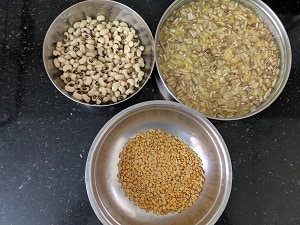
Wash and soak the dal for 20 minutes. Chop the vazhaipoo and keep it submerged in a buttermilk mixture. Soak the Karamani overnight and drain the water. Pressure cook all the 3 ingredients separately.

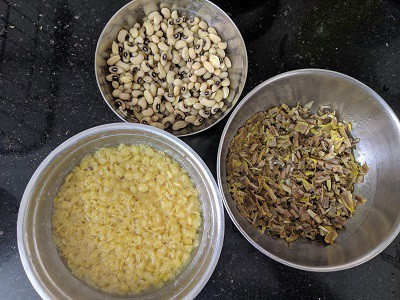
The pressure cooked ingredients are ready. Mash the dal and keep aside.

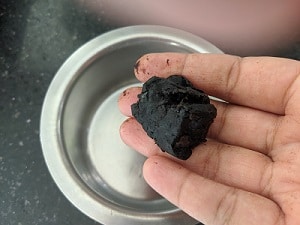
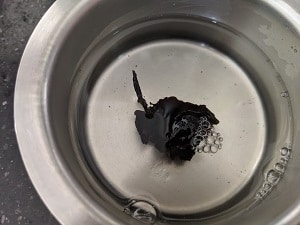
In the meanwhile, soak a lemon size tamarind ball in hot water for atleast 10 minutes. Squeeze out the water and keep aside.

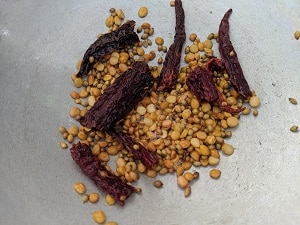
Heat a thick bottom kadhai, add some coconut oil, chana dal, whole dry red chillies (kashmiri red chillies used here) and coriander seeds. Saute until they have nicely roasted.
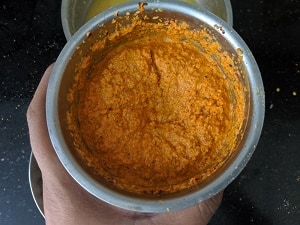
Cool it completely and grind it along with freshly grated coconut into a thick paste. Add very little water while grinding.
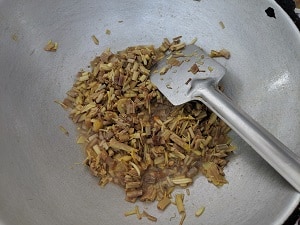
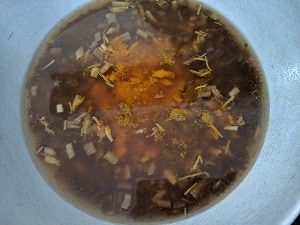
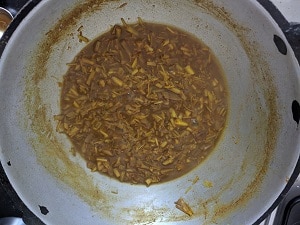
In the same kadhai, add the cooked vazhaipoo along with the tamarind water. Add turmeric powder, hing and salt to taste. Cook this until the raw smell of the tamarind goes off.
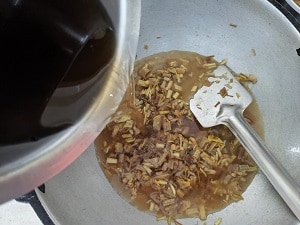
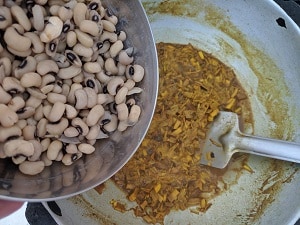
Add the cooked karamani or cow peas to this along with cooked dal, coconut paste and adjust seasoning.
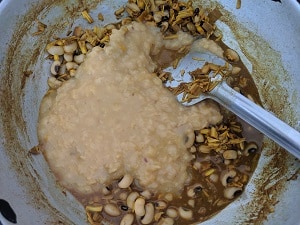
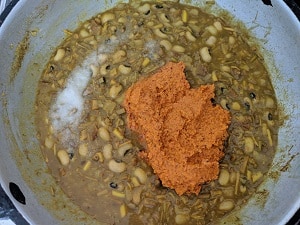
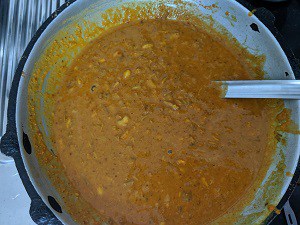
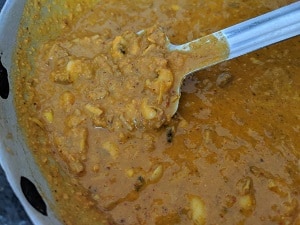
Mix well and cook for a few minutes until the gravy thickens. Add water to adjust the Kootu consistency as required. Once it reaches a boil, switch off the flame, add the tempering and serve piping hot with chapati or rice.
Recipe Notes -
- I have added Kashmiri Red Chillies for the colour and not the spice. If you want a spicy gravy, add a mix or a suitable variety.
- I have used coconut oil for the gravy and the tempering. I tend to do that mostly for coconut based gravies and we love the aroma. You can use any neutral oil, sesame oil etc of your choice.
- The water quantity mentioned in the recipe is approx quantity only. It does not include water for soaking, washing and pressure cooking the ingredients. Gravy consistency differs from person to person. If you are serving this with rice, it can be a little watery consistency whereas for chapati, it can be thick. So add water accordingly.
- For a gluten free version of the recipe - skip hing or asafoetida.
- The recipe is Vegan.
Some Kootu Recipes on the blog that you would like to try
- Cabbage Kootu
- Pudalangai Kootu
- Vazhaithandu Kootu - This is made from Banana Stem
- Noolkol Kootu or Kohlrabi Kootu

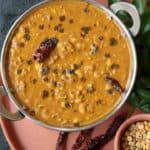
Vazhaipoo Kootu (Banana Flower Kootu Recipe)
Ingredients
Ingredients for Kootu
- 1 & 1/2 cups Vazhaipoo (Cleaned and Chopped) 1 cup is 250 ml measurement
- 1/4 cup Karamani (to be soaked)
- 1/3 cup Toor Dal or Arhar Dal
- 1 no. Small Lemon Size Tamarind Ball
- 1/2 tsp Turmeric Powder
- 1/4 tsp Hing or Asafoetida
- Salt to taste
- 1 cup Water to adjust the gravy consistency Approx quantity mentioned.
Ingredients for the Coconut Gravy for Kootu
- 1/2 cup Freshly Grated Coconut
- 2 tbsp Chana Dal 1 tbsp is 15 ml
- 1 tbsp Coriander Seeds or Malli
- 4 nos. Kashmiri Red Chillies (whole)
- 2 tsp Coconut Oil 1 tsp is 5 ml
- 1/2 cup Water for grinding
Ingredients for Tempering
- 2 tsp Coconut Oil
- 1/2 tsp Mustard Seeds
- 2-3 nos. Whole red chillies (broken into pieces)
- Curry Leaves as required
Instructions
- Wash and soak the dal for 20 minutes. Chop the vazhaipoo and keep it submerged in a buttermilk mixture. Soak the Karamani overnight and drain the water. Pressure cook all the 3 ingredients separately.
- The pressure cooked ingredients are ready. Mash the dal and keep aside.
- In the meanwhile, soak a lemon size tamarind ball in hot water for atleast 10 minutes. Squeeze out the water and keep aside.
- Heat a thick bottom kadhai, add some coconut oil, chana dal, whole dry red chillies (kashmiri red chillies used here) and coriander seeds. Saute until they have nicely roasted.
- Cool it completely and grind it along with freshly grated coconut into a thick paste. Add very little water while grinding.
- In the same kadhai, add the cooked vazhaipoo along with the tamarind water. Add turmeric powder, hing and salt to taste. Cook this until the raw smell of the tamarind goes off.
- Add the cooked karamani or cow peas to this along with cooked dal, coconut paste and adjust seasoning (Note - We have added some salt while cooking the vazhaipoo in tamarind)
- Mix well and cook for a few minutes until the gravy thickens. Add water to adjust the Kootu consistency as required. Once it reaches a boil, switch off the flame, add the tempering and serve piping hot with chapati or rice.
Notes
- I have added Kashmiri Red Chillies for the colour and not the spice. If you want a spicy gravy, add a mix or a suitable variety
- I have used coconut oil for the gravy and the tempering. I tend to do that mostly for coconut based gravies and we love the aroma. You can use any neutral oil, sesame oil etc of your choice.
- The water quantity mentioned in the recipe is approx quantity only. It does not include water for soaking, washing and pressure cooking the ingredients. Gravy consistency differs from person to person. If you are serving this with rice, it can be a little watery consistency whereas for chapati, it can be thick. So add water accordingly.
- For a gluten free version of the recipe - skip hing or asafoetida.
- The recipe is Vegan.
Tried this recipe? Share it with us! Take a picture and share it via email on vidya.masalachilli@gmail.com or you could TAG US on any of our social media handles – INSTAGRAM, TWITTER, FACEBOOK PAGE AND PINTEREST.
Help us Grow! Share the recipe with your family and friends.. Encourage everyone around you to cook at home.
You can also subscribe to our website to receive all the delicious recipes in your mail box.
We will be back again with yet another exciting recipe .. Until then, stay healthy and happy!
Vidya Narayan