


Kadalai Paruppu Sundal or Chana Dal Sundal Recipe is a quick snack made with soaked and cooked bengal gram dal. This protein rich, healthy snack is made as prasadam during the 9 days of Navaratri Festival in South India.
Kadalai Paruppu Sundal is personally my most favourite after Kondakadalai Sundal. I make this regularly at home and serve more like a side dish to rice dishes rather than a snack.
Chana Dal or Kadalai Paruppu is used extensively in a South Indian Kitchen. It is used for tempering, vadai (fried snack), paruppu usili (lentil crumble) and even in payasam (kheer).
This protein rich versatile dal or pulse is extremely filling even in small portions.
Most sundals require legumes or beans to be soaked overnight. Chana dal requires mere 2 hours of soaking and is cooked on stove top.
Pressure cooking leads to overcooking and mushy lentils and for sundal, it is important to retain the right texture.
I don't recommend kadalai paruppu sundal without soaking the lentils because it becomes difficult to digest. No short cuts for recipes like these.
Also, please ensure you drain / throw the water used for soaking. The water used for cooking the lentils can be reserved and used as stock later.
If I am making this for morning prasadam, I usually soak the lentils overnight so that I can save time. If I am making the sundal as evening snack, I soak this around noon.
For this particular Sundal recipe, I have combined the use of Sundal Masala or Sundal Podi and freshly grated coconut.
We love Sundal with Curd Rice at home or with any Kuzhambu and Rice Combo too. Particularly, Mor Kuzhambu and Kadalai Paruppu sundal are a great pair. Try it, if you haven't already!
The sundal recipe is lunch box friendly. However, if you are planning to pack this as evening snack for your husband, I would suggest skipping the fresh coconut and only use the podi.
Step by Step Kadalai Paruppu Sundal
(1) Soak 1/2 cup of Chana Dal or kadalai Paruppu in 2 cups of water for atleast 2 hours.

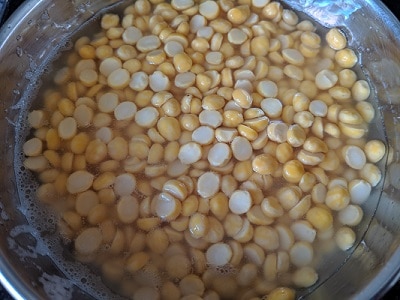
(2) After 2 hours of soaking, drain all the water, rinse well and keep aside.
(3) Heat a kadhai or pan, add 2 cups of water and bring it to a boil. Add the drained chana dal and some salt to taste.
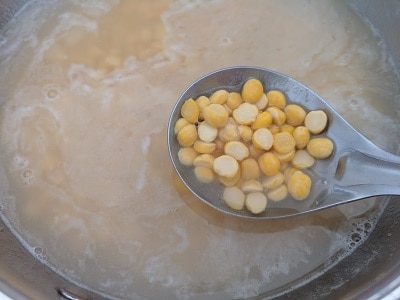
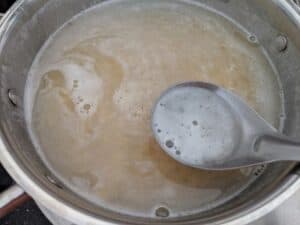
(4) While cooking the dal, you will notice the white foamy layer. Use a ladle and throw this away.

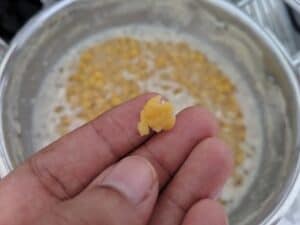
(5) To check whether chana dal is cooked, lightly press it between your fingers. It should mash easily and yet hold its shape (pic below for reference)
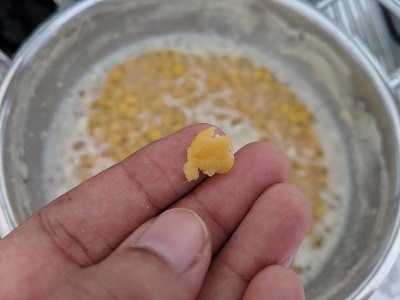
(6) Once the dal is cooked, drain the water and keep aside.
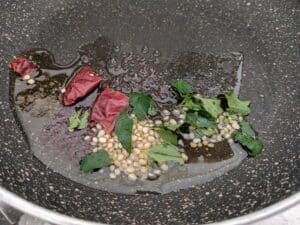
(7) Heat a pan for tempering. Add sesame oil, mustard seeds, urad dal, curry leaves, whole red chillies and a pinch of hing or asafoetida.
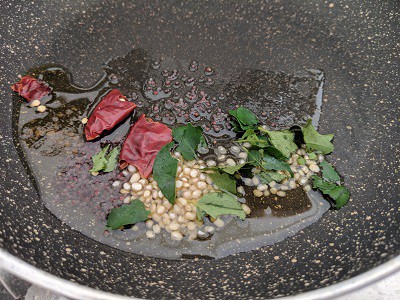
(8) Add the cooked chana dal, sundal masala podi and mix well.
Note - we had already added salt while cooking the lentils + sundal masala podi has some amount of salt so kindly check before adding extra.
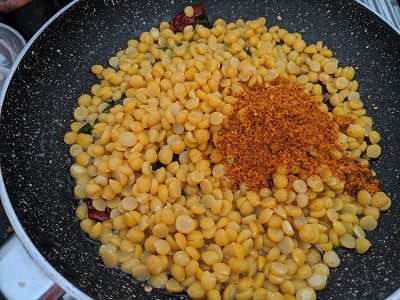
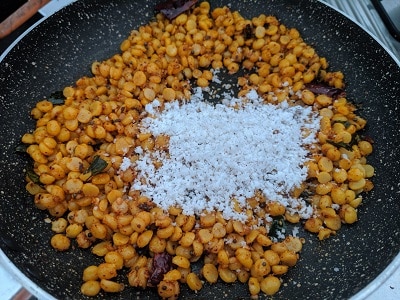
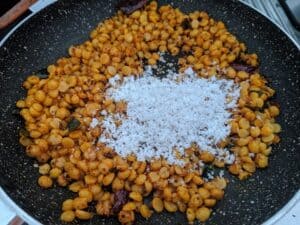
(9) Now add the freshly grated coconut, mix well, switch off the flame and serve immediately or at room temperature.
Recipe Notes -
- I will not recommend cooking Chana dal in a pressure cooker for this recipe.
- If the chana dal is soaked well, it takes around 8 to 10 minutes for the lentils to cook at medium heat. Also, with stove top, the lentils will not turn mushy or overcook.
- If you are making a big batch for guests during Navaratri - you can soak the lentils overnight as well.
- Just remember to rinse and drain all the soaked water well.
- For this particular sundal or any paruppu sundal, I prefer adding salt while the lentils are cooking so that they don't taste bland.
- The recipe is vegan. For a gluten free version, skip the hing or asafoetida from the recipe.
Sundal Recipes for Navaratri Festival on the blog -


Kadalai Paruppu Sundal - Chana Dal Sundal Recipe
Ingredients
- 1/2 cup Kadalai Paruppu (Chana Dal or Bengal Gram Dal) 1 cup is 250 ml measurement
- 4 cups Water Check notes
- 1 tbsp Sesame Oil 1 tbsp is 15 ml
- 1/2 tsp Mustard Seeds 1 tsp is 5 ml
- 1/2 tsp Urad Dal
- 2 nos. Whole dry red chillies
- 1 tbsp Sundal Podi
- 1 tbsp freshly Grated coconut
- A pinch of Hing or Asafoetida
- A sprig of Curry leaves
- salt to taste
Instructions
- Soak 1/2 cup of Chana Dal or kadalai Paruppu in 2 cups of water for atleast 2 hours.
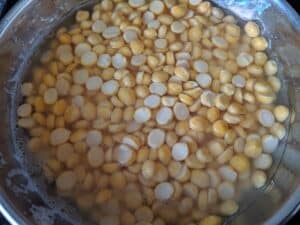
- After 2 hours of soaking, drain all the water, rinse well and keep aside.
- Heat a kadhai or pan, add 2 cups of water and bring it to a boil. Add the drained chana dal and some salt to taste.
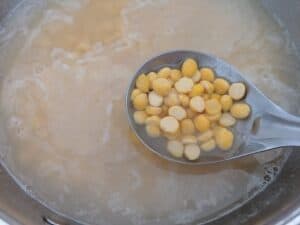
- While cooking the dal, you will notice the white foamy layer. Use a ladle and throw this away.
- To check whether chana dal is cooked, lightly press it between your fingers. It should mash easily and yet hold its shape.
- Once the dal is cooked, drain the water and keep aside.
- Heat a pan for tempering. Add sesame oil, mustard seeds, urad dal, curry leaves, whole red chillies and a pinch of hing or asafoetida.
- Add the cooked chana dal, sundal masala podi and mix well. Note - we had already added salt while cooking the lentils + sundal masala podi has some amount of salt so kindly check before adding extra.

- Now add the freshly grated coconut, mix well, switch off the flame and serve immediately or at room temperature.

Notes
- 4 cups water - 2 cups for soaking and 2 cups for cooking the chana dal.
- I will not recommend cooking Chana dal in a pressure cooker for this recipe. If the chana dal is soaked well, it takes around 8 to 10 minutes for the lentils to cook at medium heat. Also, with stove top, the lentils will not turn mushy or overcook.
- If you are making a big batch for guests during Navaratri - you can soak the lentils overnight as well. Just remember to rinse and drain all the soaked water well.
- For this particular sundal or any paruppu sundal, I prefer adding salt while the lentils are cooking so that they don't taste bland.
- The recipe is vegan. For a gluten free version, skip the hing or asafoetida from the recipe.
Tried this recipe? Share it with us! Take a picture and share it via email on vidya.masalachilli@gmail.com or you could TAG US on any of our social media handles – INSTAGRAM, TWITTER, FACEBOOK PAGE AND PINTEREST.
If you are satisfied with the recipe, please take a moment to LEAVE A COMMENT and a STAR rating on the blog. It would encourage others to try the recipe.
Please subscribe to our website to receive all the delicious recipes in your mail box.
We will be back again with yet another exciting recipe .. Until then, stay healthy and happy!
Vidya Narayan