


Holige or Bele Obbatu is a sweet boli (poli) which means sweet stuffed flatbreads that are traditionally made on Karnataka New Year i.e. Ugadi Festival. Holige is made using Whole Wheat Flour and has a stuffing made with Chana Dal or split chickpeas and Jaggery. The stuffing also contains few aromatics or spices like Cardamom, dry ginger powder or Saunth and Nutmeg.
Holige is very similar to Puran Poli of Maharashtra and Gujarat. It is made during major festivals, weddings or family functions. Be it Holi, Gudi Padwa or Sankranti, making of Puran Poli and serving it with toop or ghee and some Warm Milk is customary.
Holige is quite similar to Tamil Nadu style Boli. Usually its made with Maida or All Purpose Flour but I have made using Whole Wheat Flour. The stuffing can be either with lentils or a mix of jaggery and coconut as well. It is cooked in ghee.
This recipe requires some level of expertise in handling the dough and the filling, not to forget tons of patience in rolling and shaping the bolis, cooking them slowly with ghee or clarified butter. I have explained the recipe with step by step photos and notes so that you can ace it!
This cannot be made in oil and requires ghee only. This is a festive dessert and an occasional indulgence.
While I would eat this straight off the griddle, piping hot .. dip the poli in some ghee or a mixture of saffron milk. It is literally heavenly!
This can be eaten as breakfast, brunch, dessert or with your main meals. Absolute comfort food and traditional best!

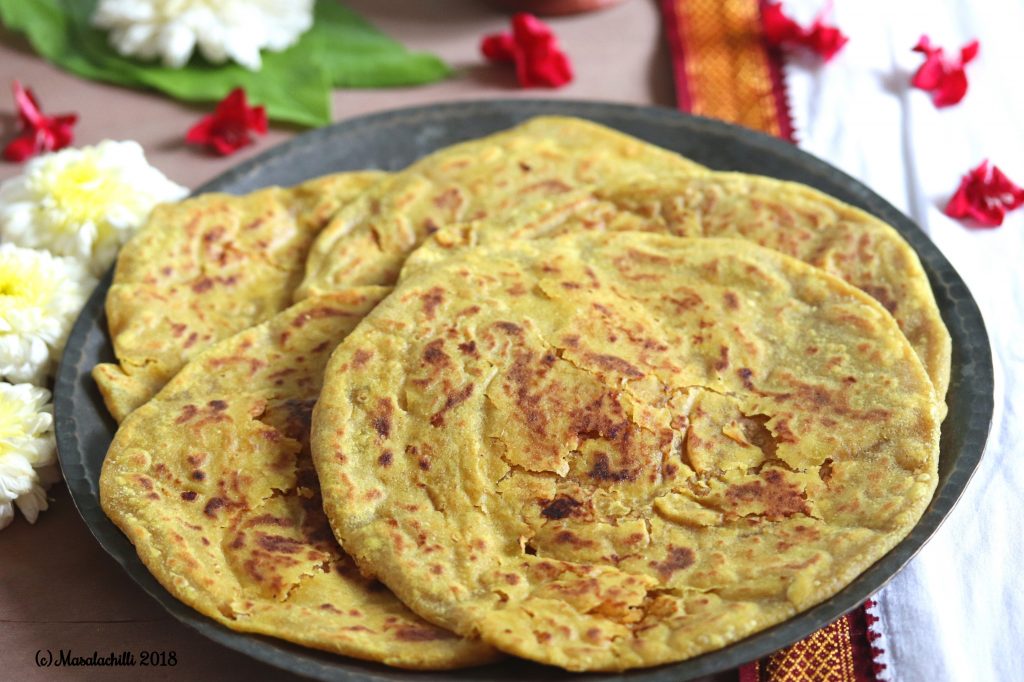
I usually shy away from making elaborate desserts simply because with the two of us, it gets difficult to control and consume at home. I love making desserts and traditional sweets especially.
I mean look at the piece of this yumminess that is filled with the lentil + jaggery filling.. One certainly cannot stay in control!

This was one of my mother's favourite desserts as well. The sweet tooth part of my genes are from her. She made the best desserts and ate them with much enthusiasm too.
The very first time I tried this, I failed miserably as they turned out quite hard. I learnt my lesson on not limiting the quantity of ghee and just enjoying small portions. The next attempt was a huge success.
Recipe for Holige / Obbattu or Puran Poli – Festive Dessert from Karnataka
Soaking time – 6 hours + Dough Rest time – 45 minutes
Cook Time – 45 minutes
Serves 12 nos. Polis or flatbreads
Ingredients for the covering
- 2 cups Whole Wheat flour
- ¼ tsp of Turmeric Powder
- ¼ tsp of salt
- 2 tblsp Ghee or Clarified butter
- Water to knead the dough as required
Method to make the covering –
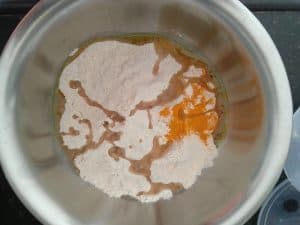
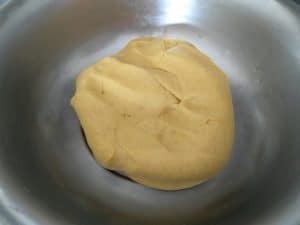
- In a large bowl, add flour, turmeric powder, salt and mix well.
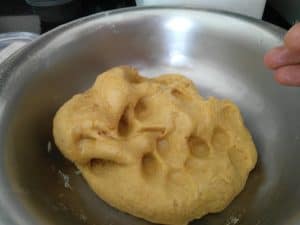
- Add water slowly to form a soft dough.
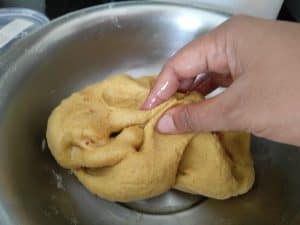
- Add a tblps of ghee or clarified butter and knead this dough lightly for atleast 5-10 minutes.
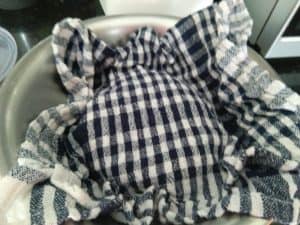
- Now smear 1 tblsp of ghee over the dough and let it rest for 30 minutes.
- After the dough has rested for 30 minutes, knead it again for another 5 minutes, let it rest for 10 minutes and then you have your covering ready to be filled and shaped.

Ingredients for the filling
- 1 cup Chana Dal
- Water as required for soaking the dal
- 1 cup crushed Organic jaggery
- ¼ tsp cardamom powder or elaichi powder
- A pinch of nutmeg or Jaiphal
- A pinch of Saunth or dry ginger powder
- 1 tblsp ghee or clarified butter
Method –
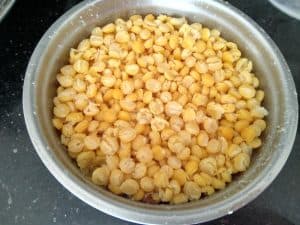
- Soak the chana dal for atleast 5 to 6 hours, preferably overnight as I always do.
- Drain the water completely, add just 4 tblsp of water, cover and cook it in a pressure cooker for 5-6 whistles. The cooked dal should be completely mushy when pressed lightly. If it is dry in the centre, cook again for 2 whistles.
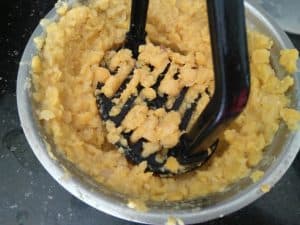
- Drain the water completely and mash the dal well.
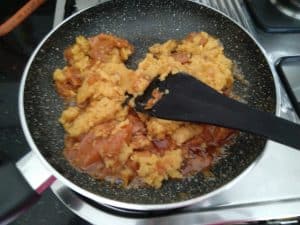
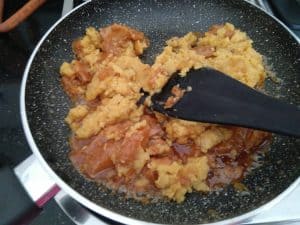
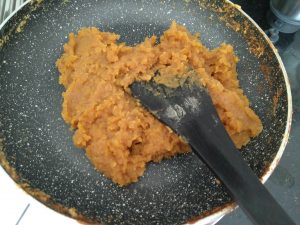
- Heat a non-stick pan or kadhai, add the mashed dal, crushed jaggery and ensure the gas flame is low. Stir it continuously to avoid burning of the jaggery at the bottom of the pan.
- Add ghee and keep stirring the mixture.
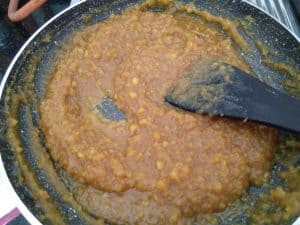
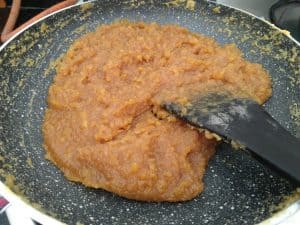
- The mixture will firstly turn completely runny but will eventually start cooking and thickening before turning into a blob at the corner of the pan or kadhai which is the exact moment you switch off the gas flame and add the aromatics like Elaichi powder, saunth and nutmeg.
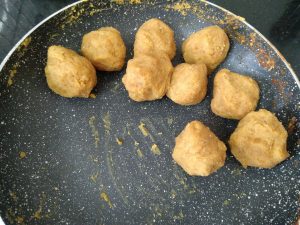
- Mix well and allow it to completely cool down.
- Make balls of equal quantity and be ready to make the polis or holige.
Key Steps to make soft Holige
- Ensure you have melted ghee or clarified butter with you at all times during the making and cooking of the polis since it involves greasing of the surface and cooking the polis in a tawa or griddle.
- Make equal balls of the Whole wheat flour dough and keep aside.
- Smear some ghee in your palms and take a dough ball.
- Now grease either a plastic paper or I simply make do with my good quality marble base that I use to make rotis etc.
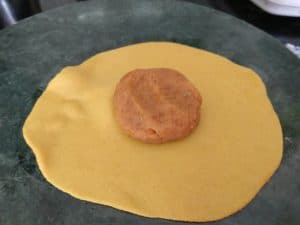
- Pat the dough ball into a small thick circle on your hands and place the filling (which are also made into balls) and try to cover and seal. Similar to making parathas with filling.
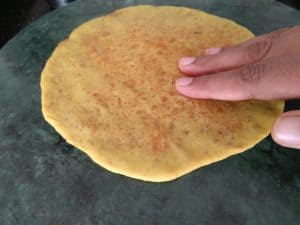
- Dip your finger tips in ghee and apply on the disc which will now be patted slowly on the marble surface. Do it slowly, applying pressure at all corners lightly ensuring the filling doesn’t sneak out from the edges nor does the polis tear.
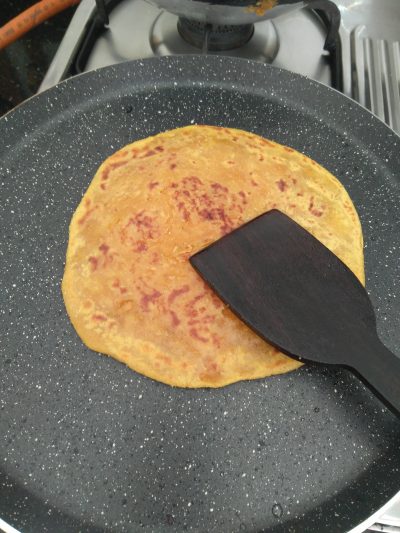
- Meanwhile, heat a griddle and once the bolis are done, place them lightly on the hot griddle. Ensure the flame is low when cooking them.
- Gently coat all the sides with ghee and smear on the top as well while they are cooking. Turn them over / Flip and cook on the other side too by once again pouring few drops of ghee on the edges.
- Remove from griddle and serve hot.
- These flatbreads remain fresh in the refrigerator for 2-3 days.


Recipe notes
- While making each and every boli or poli, ensure the marble top, the fingertips and the dough with the filling are all smeared with ghee. This enables you to shape and also prevents the boli from tearing while being shaped.
- Ensure good resting time for the wheat flour dough. Never be in a hurry to make it quickly as soon as you knead. It would turn to hard polis. Always cover the dough with a damp cloth while it is resting to ensure the dough doesn’t dry out. Smear the ghee generously while it is being rested, you will see that the dough absorbs all the ghee which in turn ensures your polis are soft and manageable to knead.
- If you are using a plastic sheet, grease the sheet after every boli in the similar way.
- Don’t make ahead and keep these polis in advance. They tend to give out moisture due to the melted jaggery so, make one at a time and cook. Patience is the key.
- Apply ghee generously while making this. It turns out very soft. If you try and shy away from adding ghee, it would lead to very hard polis.
- Ensure your gas flame is always low while cooking the polis. They usually puff up slightly which indicates they have cooked well.
- I have added only 1 cup of jaggery as we don’t prefer the polis to be too sweet. You can however, go upto 1.5 cups which actually taste delicious.
Other Traditional Festive Dessert Recipes -
- Aval Kesari - A Sweet pudding using flattened rice, ghee and sugar for Krishna Jayanti Festival
- Banana Sheera - Maharashtrian Style Sheera Recipe that is made for Satyanarayan Pooja
- Neyyappam - Kerala Style Sweet Appams made during Karthigai Deepam and Krishna Jayanti
Tried this recipe? Share it with us! Take a picture and share it via email on vidya.masalachilli@gmail.com or you could TAG US on any of our social media handles – INSTAGRAM, TWITTER, FACEBOOK PAGE AND PINTEREST.
If you are satisfied with the recipe, please take a moment to LEAVE A COMMENT and a STAR rating on the blog. It would encourage others to try the recipe.

Holige / Bele Obbattu or Puran Poli – A Traditional Festive Indian Dessert
Equipment
- Griddle to cook Holige
- Rolling Board and Pin (used for Indian breads like paratha, roti)
Ingredients
INGREDIENTS FOR THE COVERING OR WHEAT DOUGH
- 2 cups Whole Wheat Flour (1 cup is 200 ml measurement) Traditionally made with Refined Flour or Maida
- ¼ tsp Turmeric Powder
- ¼ tsp salt to taste
- 2 tbsp Ghee to knead the dough
- Water as required to knead the dough
INGREDIENTS FOR THE SWEET LENTIL JAGGERY FILLING
- 1 cup Chana Dal or Bengal Gram Dal
- 1 cup Jaggery (powder the jaggery and measure)
- ¼ tsp Cardamom Powder or Elaichi Powder
- A pinch of nutmeg powder or Jaiphal
- A pinch of saunth or dry ginger powder
- 1 tbsp Ghee or Clarified butter Read below regarding ghee quantity for the entire recipe
- Water as required to pressure cook chana dal
Instructions
Method for wheat flour covering
- In a large bowl, add flour, turmeric powder, salt and mix well.
- Add water slowly to form a soft dough.
- Add a tbsp of ghee or clarified butter and knead this dough lightly for atleast 5-10 minutes
- Now smear 1 tbsp of ghee over the dough and let it rest for 30 minutes.
- After the dough has rested for 30 minutes, knead it again for another 5 minutes, let it rest for 10 minutes and then you have your covering ready to be filled and shaped.
Method to make the sweet filling / stuffing
- Soak the chana dal for atleast 5 to 6 hours, preferably overnight as I always do.
- Drain the water completely, add just 4 tblsp of water, cover and cook it in a pressure cooker for 5-6 whistles. The cooked dal should be completely mushy when pressed lightly. If it is dry in the centre, cook again for 2 whistles.
- After the water has drained, mash the dal well.
- Heat a non-stick pan or kadhai, add the mashed dal, crushed jaggery and ensure the gas flame is low. Stir it continuously to avoid burning of the jaggery at the bottom of the pan.
- Add ghee and keep stirring the mixture.
- The mixture will firstly turn completely runny but will eventually start cooking and thickening before turning into a blob at the corner of the pan or kadhai which is the exact moment you switch off the gas flame and add the aromatics like Elaichi powder, saunth and nutmeg.
- Mix well and allow it to completely cool down.
- Make balls of equal quantity, and be ready to make the polis or holige
Making Holige or Bele Obbattu
- Ensure you have melted ghee or clarified butter with you at all times during the making and cooking of the polis since it involves greasing of the surface and cooking the polis in a tawa or griddle.
- Make equal balls of the Whole wheat flour dough and keep aside.
- Smear some ghee in your palms and take a dough ball.
- Now grease either a plastic paper or I simply make do with my good quality marble base that I use to make rotis etc.
- Pat the dough ball into a small thick circle on your hands and place the filling (which are also made into balls) and try to cover and seal. Similar to making parathas with filling
- Dip your finger tips in ghee and apply on the disc which will now be patted slowly on the marble surface. Do it slowly, applying pressure at all corners lightly ensuring the filling doesn’t sneak out from the edges nor does the polis tear.
- Meanwhile, heat a griddle and once the bolis are done, place them lightly on the hot griddle. Ensure the flame is low when cooking them.
- Gently coat all the sides with ghee and smear on the top as well while they are cooking. Turn them over / Flip and cook on the other side too by once again pouring few drops of ghee on the edges.
- Remove from griddle and serve hot.These flatbreads remain good in the refrigerator for 2-3 days.
Notes
- While making each and every boli or poli, ensure the marble top, the fingertips and the dough with the filling are all smeared with ghee. This enables you to shape and also prevents the boli from tearing while being shaped.
- Ensure good resting time for the wheat flour dough. Never be in a hurry to make it quickly as soon as you knead. It would turn to hard polis. Always cover the dough with a damp cloth while it is resting to ensure the dough doesn’t dry out. Smear the ghee generously while it is being rested, you will see that the dough absorbs all the ghee which in turn ensures your polis are soft and manageable to knead.
- If you are using a plastic sheet, grease the sheet after every boli in the similar way.
- Don’t make ahead and keep these polis in advance. They tend to give out moisture due to the melted jaggery so, make one at a time and cook. Patience is the key.
- Apply ghee generously while making this. It turns out very soft. If you try and shy away from adding ghee, it would lead to very hard polis.
- Ensure your gas flame is always low while cooking the polis. They usually puff up slightly which indicates they have cooked well.
- I have added only 1 cup of jaggery as we don’t prefer the polis to be too sweet. You can however, go upto 1.5 cups which actually taste delicious.
Please subscribe to our website to receive all the delicious recipes in your mail box.
We will be back again with yet another exciting recipe .. Until then, stay healthy and happy!
Vidya Narayan