
Holige / Bele Obbattu or Puran Poli – A Traditional Festive Indian Dessert or Sweet that are stuffed flatbreads made with Whole Wheat Flour, Lentils and Jaggery.

Holige or Bele Obbatu is a sweet boli (poli) which means sweet stuffed flatbreads that are traditionally made on Karnataka New Year i.e. Ugadi Festival. Holige is made using Whole Wheat Flour and has a stuffing made with Chana Dal or split chickpeas and Jaggery. The stuffing also contains few aromatics or spices like Cardamom, dry ginger powder or Saunth and Nutmeg.
Holige is very similar to Puran Poli of Maharashtra and Gujarat. It is made during major festivals, weddings or family functions. Be it Holi, Gudi Padwa or Sankranti, making of Puran Poli and serving it with toop or ghee and some Warm Milk is customary.
Holige is quite similar to Tamil Nadu style Boli. Usually its made with Maida or All Purpose Flour but I have made using Whole Wheat Flour. The stuffing can be either with lentils or a mix of jaggery and coconut as well. It is cooked in ghee.
This recipe requires some level of expertise in handling the dough and the filling, not to forget tons of patience in rolling and shaping the bolis, cooking them slowly with ghee or clarified butter. I have explained the recipe with step by step photos and notes so that you can ace it!
This cannot be made in oil and requires ghee only. This is a festive dessert and an occasional indulgence.
While I would eat this straight off the griddle, piping hot .. dip the poli in some ghee or a mixture of saffron milk. It is literally heavenly!
This can be eaten as breakfast, brunch, dessert or with your main meals. Absolute comfort food and traditional best!
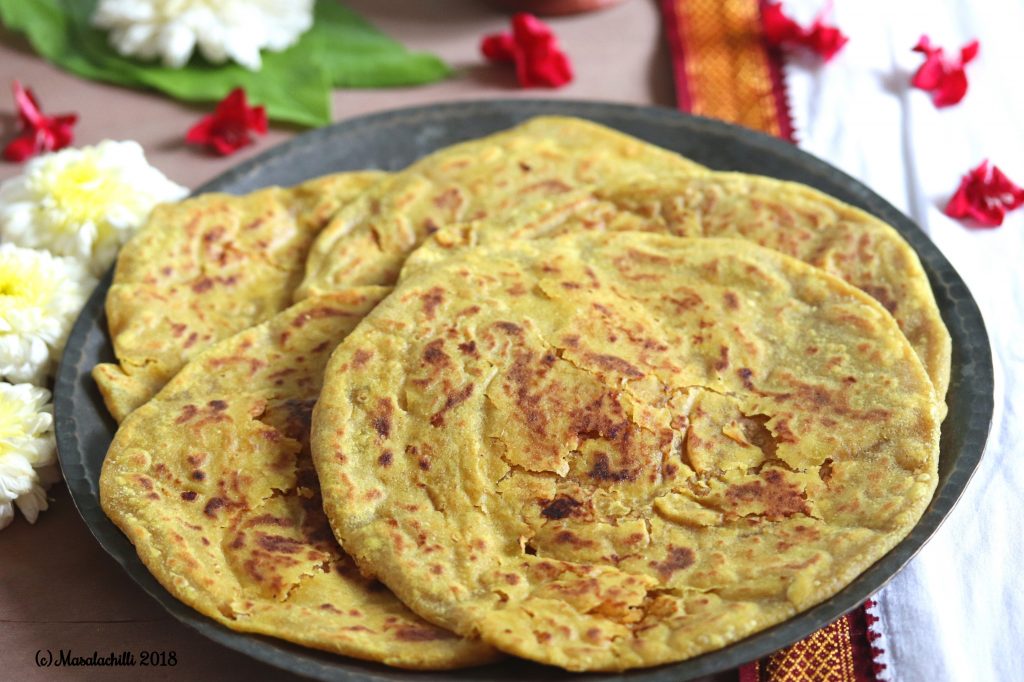
I usually shy away from making elaborate desserts simply because with the two of us, it gets difficult to control and consume at home. I love making desserts and traditional sweets especially.
I mean look at the piece of this yumminess that is filled with the lentil + jaggery filling.. One certainly cannot stay in control!

This was one of my mother's favourite desserts as well. The sweet tooth part of my genes are from her. She made the best desserts and ate them with much enthusiasm too.
The very first time I tried this, I failed miserably as they turned out quite hard. I learnt my lesson on not limiting the quantity of ghee and just enjoying small portions. The next attempt was a huge success.
Recipe for Holige / Obbattu or Puran Poli – Festive Dessert from Karnataka
Soaking time – 6 hours + Dough Rest time – 45 minutes
Cook Time – 45 minutes
Serves 12 nos. Polis or flatbreads
Ingredients for the covering
- 2 cups Whole Wheat flour
- ¼ tsp of Turmeric Powder
- ¼ tsp of salt
- 2 tblsp Ghee or Clarified butter
- Water to knead the dough as required
Method to make the covering –
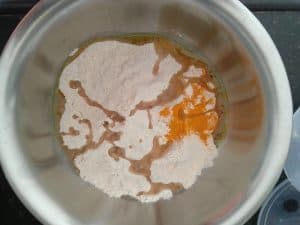
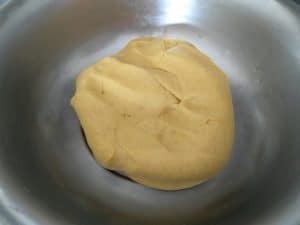
- In a large bowl, add flour, turmeric powder, salt and mix well.
- Add water slowly to form a soft dough.
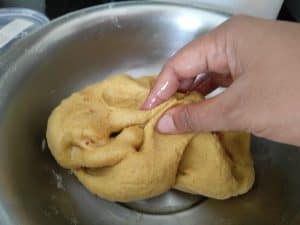
- Add a tblps of ghee or clarified butter and knead this dough lightly for atleast 5-10 minutes.
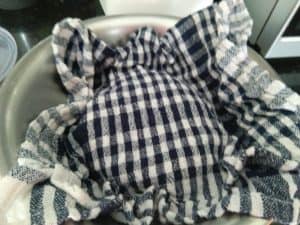
- Now smear 1 tblsp of ghee over the dough and let it rest for 30 minutes.
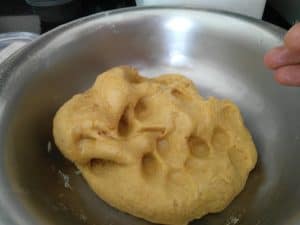
- After the dough has rested for 30 minutes, knead it again for another 5 minutes, let it rest for 10 minutes and then you have your covering ready to be filled and shaped.
Ingredients for the filling
- 1 cup Chana Dal
- Water as required for soaking the dal
- 1 cup crushed Organic jaggery
- ¼ tsp cardamom powder or elaichi powder
- A pinch of nutmeg or Jaiphal
- A pinch of Saunth or dry ginger powder
- 1 tblsp ghee or clarified butter
Method –
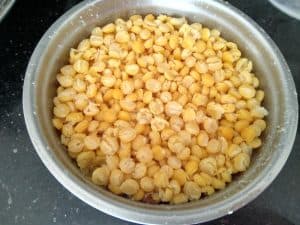
- Soak the chana dal for atleast 5 to 6 hours, preferably overnight as I always do.
- Drain the water completely, add just 4 tblsp of water, cover and cook it in a pressure cooker for 5-6 whistles. The cooked dal should be completely mushy when pressed lightly. If it is dry in the centre, cook again for 2 whistles.
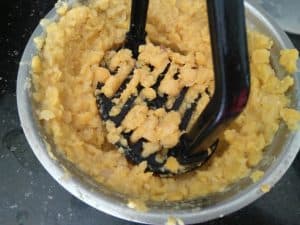
- Drain the water completely and mash the dal well.
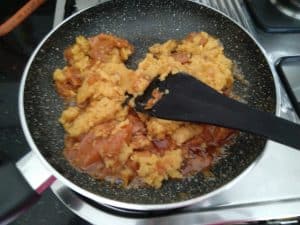
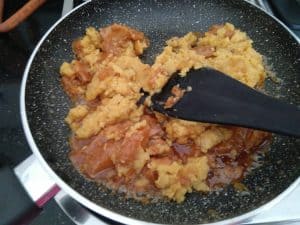
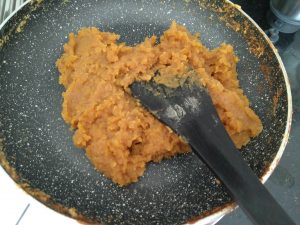
- Heat a non-stick pan or kadhai, add the mashed dal, crushed jaggery and ensure the gas flame is low. Stir it continuously to avoid burning of the jaggery at the bottom of the pan.
- Add ghee and keep stirring the mixture.
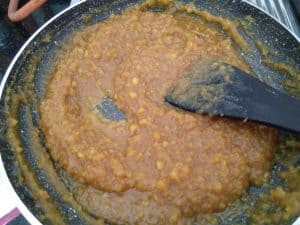
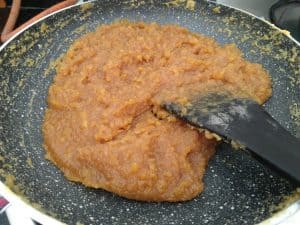
- The mixture will firstly turn completely runny but will eventually start cooking and thickening before turning into a blob at the corner of the pan or kadhai which is the exact moment you switch off the gas flame and add the aromatics like Elaichi powder, saunth and nutmeg.
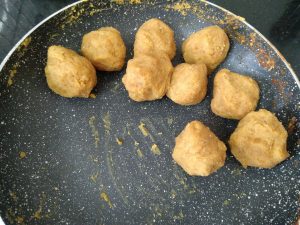
- Mix well and allow it to completely cool down.
- Make balls of equal quantity and be ready to make the polis or holige.
Key Steps to make soft Holige
- Ensure you have melted ghee or clarified butter with you at all times during the making and cooking of the polis since it involves greasing of the surface and cooking the polis in a tawa or griddle.
- Make equal balls of the Whole wheat flour dough and keep aside.
- Smear some ghee in your palms and take a dough ball.
- Now grease either a plastic paper or I simply make do with my good quality marble base that I use to make rotis etc.
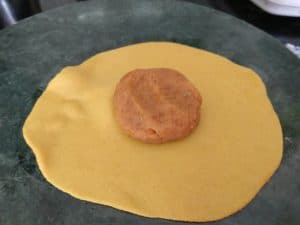
- Pat the dough ball into a small thick circle on your hands and place the filling (which are also made into balls) and try to cover and seal. Similar to making parathas with filling.
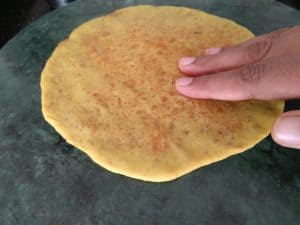
- Dip your finger tips in ghee and apply on the disc which will now be patted slowly on the marble surface. Do it slowly, applying pressure at all corners lightly ensuring the filling doesn’t sneak out from the edges nor does the polis tear.
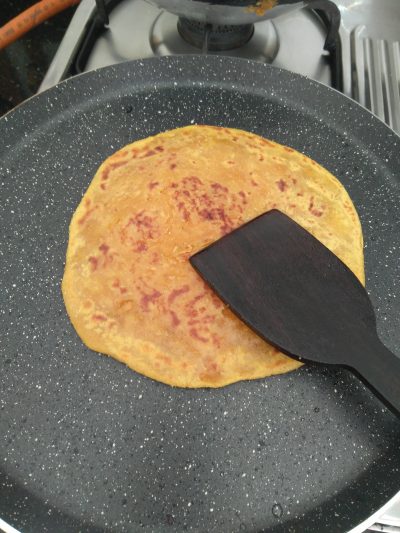
- Meanwhile, heat a griddle and once the bolis are done, place them lightly on the hot griddle. Ensure the flame is low when cooking them.
- Gently coat all the sides with ghee and smear on the top as well while they are cooking. Turn them over / Flip and cook on the other side too by once again pouring few drops of ghee on the edges.
- Remove from griddle and serve hot.
- These flatbreads remain fresh in the refrigerator for 2-3 days.

Recipe notes
- While making each and every boli or poli, ensure the marble top, the fingertips and the dough with the filling are all smeared with ghee. This enables you to shape and also prevents the boli from tearing while being shaped.
- Ensure good resting time for the wheat flour dough. Never be in a hurry to make it quickly as soon as you knead. It would turn to hard polis. Always cover the dough with a damp cloth while it is resting to ensure the dough doesn’t dry out. Smear the ghee generously while it is being rested, you will see that the dough absorbs all the ghee which in turn ensures your polis are soft and manageable to knead.
- If you are using a plastic sheet, grease the sheet after every boli in the similar way.
- Don’t make ahead and keep these polis in advance. They tend to give out moisture due to the melted jaggery so, make one at a time and cook. Patience is the key.
- Apply ghee generously while making this. It turns out very soft. If you try and shy away from adding ghee, it would lead to very hard polis.
- Ensure your gas flame is always low while cooking the polis. They usually puff up slightly which indicates they have cooked well.
- I have added only 1 cup of jaggery as we don’t prefer the polis to be too sweet. You can however, go upto 1.5 cups which actually taste delicious.
Other Traditional Festive Dessert Recipes -
- Aval Kesari - A Sweet pudding using flattened rice, ghee and sugar for Krishna Jayanti Festival
- Banana Sheera - Maharashtrian Style Sheera Recipe that is made for Satyanarayan Pooja
- Neyyappam - Kerala Style Sweet Appams made during Karthigai Deepam and Krishna Jayanti
Tried this recipe? Share it with us! Take a picture and share it via email on [email protected] or you could TAG US on any of our social media handles – INSTAGRAM, TWITTER, FACEBOOK PAGE AND PINTEREST.
If you are satisfied with the recipe, please take a moment to LEAVE A COMMENT and a STAR rating on the blog. It would encourage others to try the recipe.
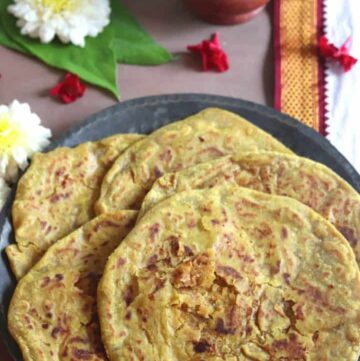
Holige / Bele Obbattu or Puran Poli – A Traditional Festive Indian Dessert
Equipment
- Griddle to cook Holige
- Rolling Board and Pin (used for Indian breads like paratha, roti)
Ingredients
INGREDIENTS FOR THE COVERING OR WHEAT DOUGH
- 2 cups Whole Wheat Flour (1 cup is 200 ml measurement) Traditionally made with Refined Flour or Maida
- ¼ tsp Turmeric Powder
- ¼ tsp salt to taste
- 2 tbsp Ghee to knead the dough
- Water as required to knead the dough
INGREDIENTS FOR THE SWEET LENTIL JAGGERY FILLING
- 1 cup Chana Dal or Bengal Gram Dal
- 1 cup Jaggery (powder the jaggery and measure)
- ¼ tsp Cardamom Powder or Elaichi Powder
- A pinch of nutmeg powder or Jaiphal
- A pinch of saunth or dry ginger powder
- 1 tbsp Ghee or Clarified butter Read below regarding ghee quantity for the entire recipe
- Water as required to pressure cook chana dal
Instructions
Method for wheat flour covering
- In a large bowl, add flour, turmeric powder, salt and mix well.
- Add water slowly to form a soft dough.
- Add a tbsp of ghee or clarified butter and knead this dough lightly for atleast 5-10 minutes
- Now smear 1 tbsp of ghee over the dough and let it rest for 30 minutes.
- After the dough has rested for 30 minutes, knead it again for another 5 minutes, let it rest for 10 minutes and then you have your covering ready to be filled and shaped.
Method to make the sweet filling / stuffing
- Soak the chana dal for atleast 5 to 6 hours, preferably overnight as I always do.
- Drain the water completely, add just 4 tblsp of water, cover and cook it in a pressure cooker for 5-6 whistles. The cooked dal should be completely mushy when pressed lightly. If it is dry in the centre, cook again for 2 whistles.
- After the water has drained, mash the dal well.
- Heat a non-stick pan or kadhai, add the mashed dal, crushed jaggery and ensure the gas flame is low. Stir it continuously to avoid burning of the jaggery at the bottom of the pan.
- Add ghee and keep stirring the mixture.
- The mixture will firstly turn completely runny but will eventually start cooking and thickening before turning into a blob at the corner of the pan or kadhai which is the exact moment you switch off the gas flame and add the aromatics like Elaichi powder, saunth and nutmeg.
- Mix well and allow it to completely cool down.
- Make balls of equal quantity, and be ready to make the polis or holige
Making Holige or Bele Obbattu
- Ensure you have melted ghee or clarified butter with you at all times during the making and cooking of the polis since it involves greasing of the surface and cooking the polis in a tawa or griddle.
- Make equal balls of the Whole wheat flour dough and keep aside.
- Smear some ghee in your palms and take a dough ball.
- Now grease either a plastic paper or I simply make do with my good quality marble base that I use to make rotis etc.
- Pat the dough ball into a small thick circle on your hands and place the filling (which are also made into balls) and try to cover and seal. Similar to making parathas with filling
- Dip your finger tips in ghee and apply on the disc which will now be patted slowly on the marble surface. Do it slowly, applying pressure at all corners lightly ensuring the filling doesn’t sneak out from the edges nor does the polis tear.
- Meanwhile, heat a griddle and once the bolis are done, place them lightly on the hot griddle. Ensure the flame is low when cooking them.
- Gently coat all the sides with ghee and smear on the top as well while they are cooking. Turn them over / Flip and cook on the other side too by once again pouring few drops of ghee on the edges.
- Remove from griddle and serve hot.These flatbreads remain good in the refrigerator for 2-3 days.
Notes
- While making each and every boli or poli, ensure the marble top, the fingertips and the dough with the filling are all smeared with ghee. This enables you to shape and also prevents the boli from tearing while being shaped.
- Ensure good resting time for the wheat flour dough. Never be in a hurry to make it quickly as soon as you knead. It would turn to hard polis. Always cover the dough with a damp cloth while it is resting to ensure the dough doesn’t dry out. Smear the ghee generously while it is being rested, you will see that the dough absorbs all the ghee which in turn ensures your polis are soft and manageable to knead.
- If you are using a plastic sheet, grease the sheet after every boli in the similar way.
- Don’t make ahead and keep these polis in advance. They tend to give out moisture due to the melted jaggery so, make one at a time and cook. Patience is the key.
- Apply ghee generously while making this. It turns out very soft. If you try and shy away from adding ghee, it would lead to very hard polis.
- Ensure your gas flame is always low while cooking the polis. They usually puff up slightly which indicates they have cooked well.
- I have added only 1 cup of jaggery as we don’t prefer the polis to be too sweet. You can however, go upto 1.5 cups which actually taste delicious.
Please subscribe to our website to receive all the delicious recipes in your mail box.
We will be back again with yet another exciting recipe .. Until then, stay healthy and happy!
Vidya Narayan
Absolutely love this yummy dish and it has been a while I had this .So tempted to try this out. Thanks for the share Vidya with the detailed step by step pictures , it is very useful!
Thanks my dear for all the lovely words and I am sure you will try them soon. I thought of putting the step by step pics specifically as this dessert is slightly tricky to make. Glad you liked it
So, glad you liked it dear.
Nice one Vidya
Thank you Sir
You are welcome Vidya
I am drooling here as puranpoli is my absolute favorite sweet. Just when I thought I should seriously lose the extra pounds, you post this 🙂
Talk about extra pounds - The next 2 months are the toughest for me with festivals lined up, visiting family / friends and not to mention, gobbling the sweets. Thanks so much and glad you liked them. Puran Poli ani tup mhanje life is sorted!
I know what you mean about the festival season...and in US we add Thanksgiving feast to it too 🙂
🙂
Inspires a lot to try this.. looks yummy
That was my idea, ha ha .. Thanks so much
looks so delicious and love the detailed pics. Puran poli is a must for us during the festivals :).
Thanks a ton Neetha for appreciating the efforts.
Love holige. Reminds me of home. ?
Awww.. That comment made me smile! Wish I could treat you some.
Such an irresistible Holige, all time favourite of our family. And that stepwise pictures tempts me a lot to dish out these ultimate traditional dish. Hard to resist Vidya..
Lets exchange with Halbai shall we? ha ha .. Thanks dear. Enjoyed making and sharing these.
Very apt dish for Karnataka cuisine there is no festival with out dis, ur pics made me droll here
I am glad I made this Prathima, was happy with the outcome and family /friends enjoyed it too. Thank you so much.
Absolutely loved this style of Puran Poli, I have never tried it. My mom in law make this during Ganesha festival. That’s a comfort food for me. Perfect share for this festive season!!
Thank you so much.
This is delicious. Perfect 🙂
As I have said before, I have not tried making many sweets as I alway felt they were difficult or needed a special knack. Poli is a great favourite and after reading this detailed recipe, Im getting ready to tackle this and make it for myself during this festival season. Thanks for the share.
My pleasure and I am sure your results would be outstanding. You do cook with passion and tackle some never heard recipes so this would be a piece of cake. If you need any tips, would be happy to help you.
You just cant beat a holige... a touch of tuppa ( ghee) and a cup of warm haalu ( milk) this is the most decadent thing I will absolutely stuff in even if i am so full.
All the right combinations Seema and such traditional beauties are simply divine. Thank you so much for the ingredients and the kind words.
I'm a huge fan of puran poli, just love it and also love to have the filling on its own. We make the filling using tuvar dal and sugar. Must try this chana dal and jaggery filling one. Also like the idea of adding a bit of turmeric to the dough.Great share for the theme. We tend to serve it not as a dessert but as a part of the main meal with kadhi, sabjis, rice.
Thank you so much and yes, this is part of the neivedya thali in Maharashtra along with Varan Bhaat and poori bhaji Srikhand combo. I ate the filling more than required actually that day. One ball was missing from the pic .. if you look closely.. ha ha.
I love to see similar version of the recipe's being used in different states with variations. I have never made puran poli and yet to attempt. You have made it to perfection, and the pic in which you have shown the filing, feeling like grabbing it and having it. Delicious.
Renu, the filling is the actual bomb. I gobbled an entire ball myself as it was too tempting. There is a very slight variation of this recipe, in terms of filling etc as they do add khoya in Bengal, coconut jaggery too in Karnataka instead of chana dal combo. Wish I could feed you some. Thanks dear.
I absolutely love obattu, the coconut version more than the daal one. Yours look so perfect and yummylicious!
Great, is the coconut version available on your blog yet? would have loved to check out. Thanks so much.
@Vidya Narayan
Not yet. Will try to post a recipe soon, if you are interested. 🙂
Post by all means dear. The more such traditional recipes, the merrier. I make it at home too, the coconut version for Ganesh Chaturthi along with the Kozhukattai. Come over to Mumbai Priya, would be happy to treat you.
I'll definitely plan a trip to Mumbai, dear. 🙂 Now, who can say no to such an offer?!
Yay!
One of crazy fan of puran poli here, love it with Gujarati kadhi, loving your step by step pics tutorial ??
Thanks a ton Jagruti!
I cant take my eyes off these flaky delicious obbattu. Perfectly made obbattu!
Thanks Anu!
With such a detailed post at their fingertips, anyone can make perfect Holige, Vidya. I doff my hat to you. I have never added turmeric to the outer covering but I can see it lends a lovely hue. Will try it this way when I make these for Ganapati.
Thanks Aruna for all the kind words. Like I mentioned, this challenge I wanted to go all out and not restrict myself. The first time I made this years back, I didnt add the turmeric and it wasnt appealing visually. Wheat when cooked gives a darker colour combined with jaggery so the addition of turmeric helps in bringing out the mild yellow tinge. I am not sure how many add this. Also with Kesar you dont get the same effect, tried that too. I avoid food colours so turmeric works best.
One of my favourite sweet. We used to prepare this during Ugadi festival. Perfectly made and your poli click is making me droll now.. feel like having 🙂
Thank you so much dear Priya!
I must say Vidya,your photography skills are improving day on day! I commend everything in this recipe - the recipe itself,props,photography and the passion for cooking!
Thank you my dear for all the lovely words!
Always an yes to poli, be it with paruppu filling or thengai or kadale yellu...it is a winner always and the and the pics that you have posted are so good that you are tempting me to make it right now. Looks amazing vidya
Thank you so much Veena for your kind words.
such a detailed step by step recipe. Love your pictures too. The holige looks yumm
Thank you Priya!
thats an awesome recipe, so well made !! Amma makes it the simialr way, so I havent yet bothered to learn it 🙂 he he ! Holige this way is quintessentially Mysore 🙂 kudos on getting it so perfect ...
Thank you so much and glad you remembered your mum via the post. They are the best!
You know, among Karnataka cuisine, two dishes were on my to-dlist as this one and Mysore pak. This dish I have tried my hand sometimes before. So opted to mysore pak for theme 😉 These sweet flatbreads are absolutely perfect for the festive season !!
Haha .. Sasmita, in my case, Mysore pak is already on the blog so I had to try this. Our story matches and I loved your post as well. Thank you so much.
One of the festive treats that we Kannadigas relish. You have made them well Vidya.
Thank you so much
Puranpoli is a quintessential of any Maharashtriain festival. Love it with loads of tup and hot milk. Yours looks so tempting Vidya ! Drooling ?
Thanks dear
Wow you shared one of my favourite dish. I love puran poli. But never tried at home. These looks delicious and now I have a full proof recipe to try. Thanks for choosing it to share.
Thank you so much.
This is one of my favorite sweet , we make it with maida.....In our place we call as obbutu.....