
Kovil Puliyodharai is South Indian Temple Style Tamarind Rice. Easy step by Step pics to make Puliyodharai at home for festivals like Aadi 18, Navratri, Pongal

Kovil Puliyodharai or South Indian Temple Style Tamarind Rice recipe. Variety Rice made with tamarind paste, spices and mixed with cooked rice, sesame oil. Served as prasadam or packed in lunch box and long distance travel.
Puliyodharai Sadam is truly delicious. It is tangy, spicy and keeps you wanting for more. Puliyodharai is Perumal (Vishnu) Temple specialty. This temple style tamarind rice is a bit different than the regular variety.
Some of the South Indian temples known for their puliyodharai are Tirupati, SriRangam temple, Sri Krishna Mutt, Udipi and temples in Thanjavur.
Tamarind Rice is made for festivals - Aadi 18 or Pathinettam Perukku, Kaanum Pongal and Navaratri.
Making temple style tamarind rice at home is a 3 step process. First, you have to make Pulikachal or the spicy tamarind rice paste. Secondly, the podi or spice mix made with lentils and red chilies. Lastly, mixing the above ingredients with cooked rice and sesame oil.

About Puliyodharai
- Made with a spicy and tangy Tamarind paste called pulikachal, Puliyodharai is a rice dish from the South Indian Cuisine.
- "Puli" in Tamil, translates as sour or tart in English.
- The tamarind paste is mixed with warm rice, oodles of gingelly oil (sesame oil or nalla ennai).
- In Kannada, it is known as "Puliyogare and in Andhra as "Pulihora".
- Puliyodharai is an excellent Travel Food option.
- The Pulikachal (Tamarind Paste) has a long shelf life, ideal for long distance travel.

Why you'll love Kovil Puliyodharai or Temple Style Tamarind Rice?
- Kovil Puliyodharai is an Iyengar Style Tamarind Rice Recipe.
- It involves - Pulikachal (tamarind paste) + Spicy lentil powder + Gingelly oil and Steamed Rice
- Iyer Style Tamarind Rice is made with pulikachal mixed with rice and sesame oil.
All the above ingredients have shelf life of over a month. It can be stored for emergencies, long distance travel and busy weekdays.

You cannot replicate the taste of temple prasad. It is a humble attempt at making something we truly enjoy at home.
I learnt how to make Kovil Puliyodharai from Manikandan Mama. Mama hails from Mysore, is an Iyengar and a cook by profession.
My MIL took Mama's help to cater a large crowd when she conducted pooja or any religious function at home.
Making Puliyodharai Podi
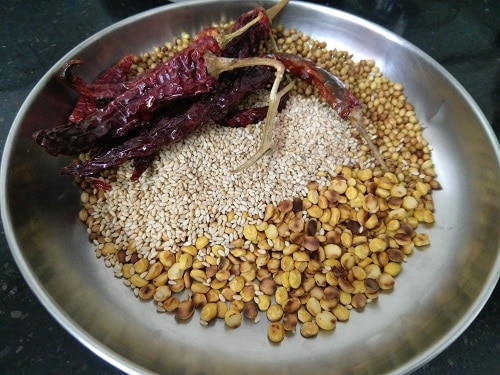
- Heat a pan, dry roast coriander seeds and keep aside.
- Now dry roast chana dal and sesame seeds separately and keep aside.
- Add a drop of oil and saute the whole red chillies.
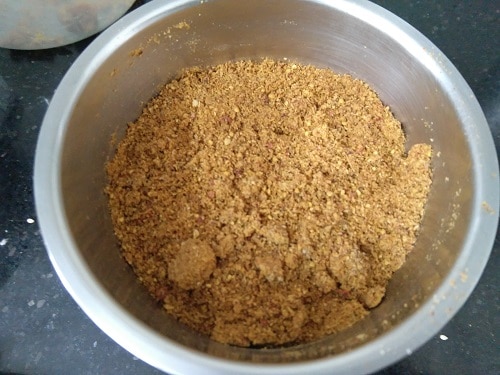
- Allow this to cool completely and then grind it to a slightly coarse powder.
How to make Pulikachal
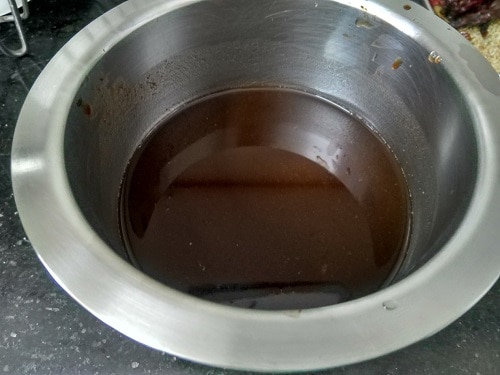
- Soak a Large Lemon Size Tamarind Ball in 3/4 cup hot water for 15 minutes.
- Squeeze and collect the thick extract (around 1.5 cups) and keep aside.
- Soak Groundnuts in water for 10 minutes. Drain and keep aside.
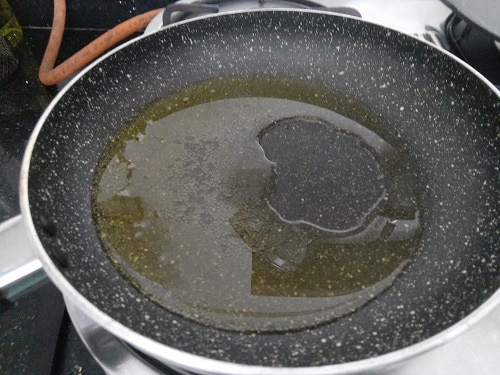
- Heat a pan, add 1/2 cup sesame oil (more oil is used for long shelf life).
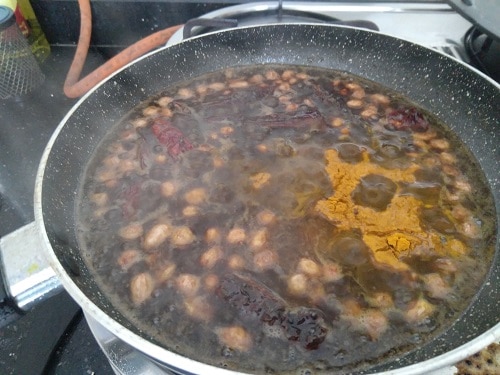
- Add mustard seeds, chana dal and whole red chillies. Let the mustard crackle, add the thick tamarind extract along with soaked groundnuts.
- Now add turmeric powder, hing or asafoetida and red chilli powder.
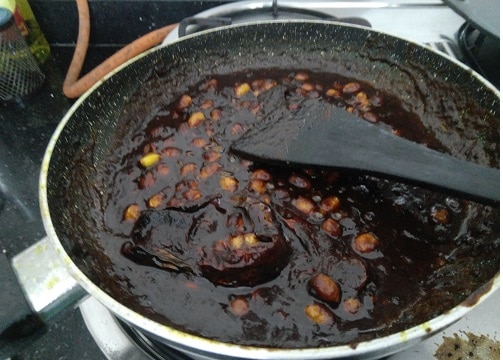
- Mix well and allow it to simmer on low flame until it thickens. There should be no raw smell of the tamarind.
- Add jaggery, salt to taste and mix well.
- Add the podi.
- Ensure you retain couple of tbsps of the podi to add / mix with the rice later. It is a trick I follow that elevates the taste.
- Remove the tamarind mix from heat (it would have thickened with the sourness reduced to a great extent) and allow it to cool completely.

Making Kovil Puliyodharai
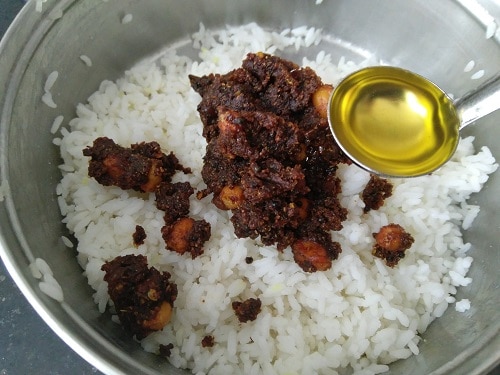
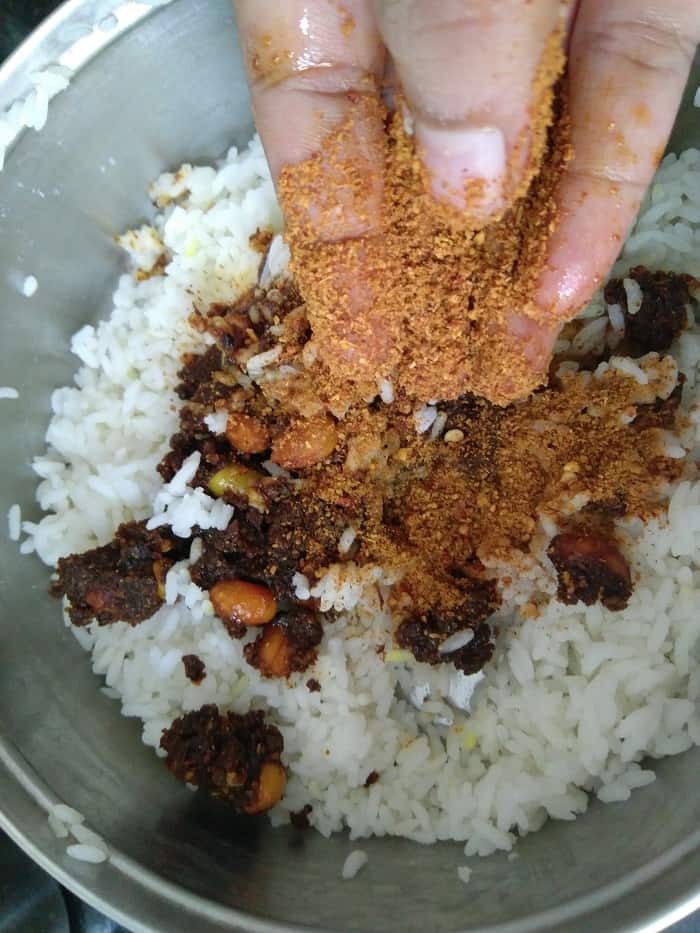
- In a bowl, add one cup cooked rice, 1 heaped tbsp of the Puliyodharai paste, 2 tsps of gingelly oil or sesame oil, some salt to taste and a tsp of the puliyodharai podi.
- Mix with your hands (no spoon please) and serve immediately.

Serving Suggestions
South Indian Rice is served with a side of fried papad, vadam or vethals.
A bowl of curd or yogurt served on the side is perfect to balance the spices.
Storage
Pulikachal or puliyodharai paste stays fresh for over a month, when stored properly.
Once cool, transfer the paste to an airtight container and store in the refrigerator.
Puliyodharai stays fresh for 48 hours. It is every South Indian's preferred choice for long distance travel.
Other South Indian Rice Recipes
Given below are some of the South Indian Variety rice recipes served as prasad in temples.
Please take a moment to LEAVE A COMMENT and a STAR * rating on the blog. It would encourage others to try the recipe or you could TAG US on any of our social media handles –INSTAGRAM, TWITTER, FACEBOOK PAGE AND PINTEREST.
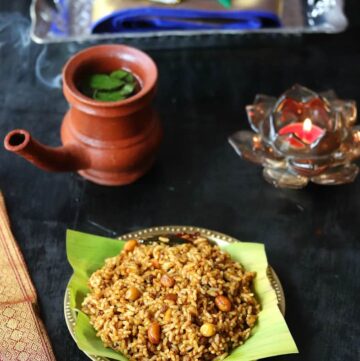
Kovil Puliyodharai |Temple Style Tamarind Rice
Equipment
- Mixer Grinder
Ingredients
Puliyodharai Podi
- 5 tablespoon Coriander Seeds
- 2 tablespoon Chana Dal
- 2 tablespoon Sesame Seeds
- 5-6 Dry Whole Red Chillies I have used Beydgi Chilies
- ½ teaspoon Oil for Roasting the chillies.
Pulikachal Ingredients (spicy tamarind paste)
- 1 Lemon Size Tamarind Ball large lemon size ball or 2 small
- 3/4 cup Hot Water for soaking tamarind
- ½ cup Sesame Oil 1 cup is 250 ml measurement
- 1 tablespoon Chana Dal (Kadala Paruppu or Bengal Gram Dal)
- 2 tablespoon Groundnuts (soaked in warm water for 10 minutes)
- 1 teaspoon Turmeric Powder
- 1/4 teaspoon Hing or Asafoetida
- 1 teaspoon Red chilli powder
- 3-4 Dry Whole Red Chillies
- 2 teaspoon Jaggery
Ingredients for Kovil Puliyodharai
- 1 cup Cooked Rice
- 1 tablespoon Puliyodharai Mix (Paste)
- ½ teaspoon Puliyodharai Podi mix
- 2 teaspoon Sesame Oil
- salt to taste
- Curry leaves + extra groundnuts as required
Instructions
Puliyodharai Podi
- Heat a pan, dry roast coriander seeds and keep aside.
- In the same pan, dry roast chana dal until brown. Set it aside to cool. Repeat the process with sesame seeds.
- In the pan, add a drop of oil and sauté whole red chilies. set it aside to cool with the other ingredients.
- Once cool, coarsely grind the ingredients and store in an airtight container.
How to make Pulikachal
- Soak large Lemon Size Tamarind Ball in 3/4 cup hot water for 15 minutes.
- Squeeze and collect the thick extract (around 1.5 cups) and keep aside.
- Soak Groundnuts in water for 10 minutes. Drain and keep aside.
- Heat a pan, add 1/2 cup sesame oil (more oil is used for long shelf life).
- Add mustard seeds, chana dal and whole red chilies. Once mustard crackles, add the thick tamarind extract and soaked groundnuts.
- Next add turmeric powder, hing or asafoetida and red chilli powder.
- Mix well and allow it to simmer on low flame until it thickens. Cook this until there is no raw tamarind smell.
- Add jaggery, salt to taste and mix well.
- Next add the podi and you will notice the pulikachal consistency to thicken. Switch off heat, remove the pan from heat and allow it to cool completely.
Making Kovil Pulidharai
- In a bowl, add one cup cooked rice, 1 heaped tablespoon of Pulikachal, 2 teaspoon of sesame oil or gingelly oil and a teaspoon of puliyodharai podi.
- Mix all the ingredients (preferably using your hands). Rest for couple of minutes until the rice absorbs the flavors and serve.
Notes
- Color of puliyodharai depends on tamarind variety and red chilies used for making puliyodharai podi. I have used seedless dark tamarind.
- Jaggery is added to balance the sourness from tamarind. Do not skip. Always taste and add extra, if required.
- Pulikachal or puliyodharai paste stays fresh for over a month, when stored properly.
- Once cool, transfer the paste to an airtight container and store in the refrigerator.
- Puliyodharai stays fresh for 48 hours. It is every South Indian's preferred choice for long distance travel.
- Under refrigeration, you may feel that the paste has dried out. It is completely fine as long as there is no mold formation.
Please subscribe to our website to receive all the delicious recipes in your mail box.
We will be back again with yet another exciting recipe .. Until then, stay healthy and happy!
Vidya Narayan
I just love it and when they are given as prasadam outside the temple, i just relish it to my heart's content
Same here! Divine blessings and taste both. Thank you.
Loved the recipe ! Making it now and the kitchen is filled with aromas of all the puli and spices.. Love your write up and photos !! Keep posting more recipes pls. Your passion is so evident
Means a lot Sweta and thank you for the encouragement. Glad you loved the recipe! Cheers, keep visiting us for many more such recipes!
Beautiful post.. loved how nicely you showed all details. I love this puliyogare ... Super tangy and yummy.
Thank you Ruchi. A batch of this in fridge saves time on busy days.
Very detailed step by step recipe. Very yummy.
Thank you so much.
This makes me too hungry Vidhya. Pulikachal with lot of peanuts, gingely oil and podi makes this too tempting. My mouth is watering when typing the comment. I am going to try this recipe soon.
Thank you Narmadha and yes, Tamarind rice is a weakness for most South Indians. Hope you enjoy making this at home.
Always wanted to know how to make this recipe... I’m going to try this one Vidya... Thank you for the share!
Hi Sandhya,
Hope you enjoy making this at home. Thanks.