
Vepampoo Thogayal is a traditional South Indian Chutney recipe made with lentils and dried neem flowers. Tastes best with steamed rice and ghee or sesame oil.

This is my 2nd recipe with Vepampoo (neem flower). The first recipe, Vepampoo Rasam was posted in April for Vishu or Tamil New Year. Today's recipe is a delicious South Indian Chutney made with Dried Neem Flowers called Vepampoo Thogayal.
I made this chutney using a batch of dry neem flowers that I sun dried and stocked last year. An activity I just carried out on a whim but now reaping its full benefits.
If you go through my post of Vepampoo Rasam, you will find the list of health benefits this ingredient has to offer. This is an age old medicine that most South Indians stock at home.
Vepampoo is available during Indian Summers (March to April). The fresh flowers are plucked and sun dried to use year round. The dried flowers can be stored in the freezer and used for a variety of recipes.
Before you ask me - Yes, Neem Flowers, even the dried ones are bitter in taste. The flowers have a sweet smell and it is very prominent during cooking especially while sauteing in ghee.
Thogayal is an appetizer of sorts. It is had with steamed rice and ghee or sesame oil as first course and even served as condiment with meals along with pickle, pachadi etc in a South Indian Thali.
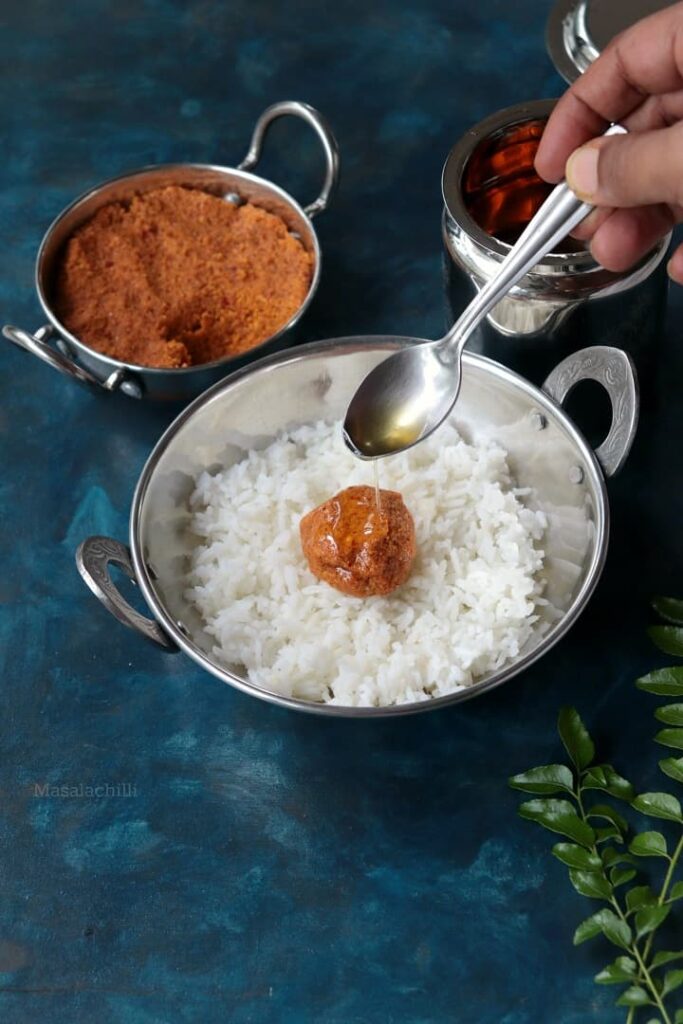
The main aim of thogayal, like any chutney, is to prepare your taste buds for the main course. Thogayals are made with a variety of fresh herbs, sun dried berries, vepampoo (in this case) in South India. They are highly nutritious and great for your gut.
Ingredients for Vepampoo Thogayal
A mix of lentils - Chana Dal (Kadalai Paruppu) and Urad Dal (Ulutham Paruppu). These lentils give body to the chutney. Thogayals are thicker than regular chutneys and coarser (due to the lentils).
Neem Flower or Vepampoo - The quantity can be reduced based on the taste and preference of your family member.
Freshly Grated Coconut - If you are using frozen coconut, thaw it and use warm water to grind the thogayal for the perfect texture and consistency.
Oil and Ghee - There are 2 varieties of fat used for this thogayal. Oil is used to saute the lentils and the dry red chillies.
Whereas the ghee is used to roast the vepampoo. You cannot directly add the vepampoo in the thogayal mix. It needs a bit of heat to release its flavours.
For a Vegan Version , you can skip the ghee and saute the vepampoo in oil but ghee brings out the best flavors.
Dry Red Chillies - I have used Pandi chillies. They are spicy and will balance well with the bitter neem
Jaggery - For this recipe, jaggery is highly recommended. Neem is quite bitter and the jaggery helps balance out the bitterness as well as the spice from the dry red chillies.
The quantity of the jaggery largely depends on what variety you are using.
I don't recommend sugar or honey for thogayal.
Tips for Thogayal consistency and texture
- Thogayal is coarser in texture as compared to a chutney.
- Before adding water, always blitz the ingredients for a couple of seconds and then add water.
- The coarse thick texture enables you to roll out the thogayal into small balls, ready to be served in individual plates.
- Grinding thogayal in small batches helps. Avoid grinding the thogayal at a long stretch. Do it in parts, don't let the jar heat up. It compromises the taste. Patience is the key.
Traditionally thogayal is never ground in a mixer grinder. It is always done on an Ammi Kal (stone grinder). Of course, it is time consuming in today's modern age with busy schedules but do try it over the weekend to notice the remarkable difference in taste.
Grinding on a stone doesn't allow heat to interfere with the ingredients, keeping the chutney moist and releasing the necessary oils and flavours.
Note - Thogayal requires very little water for grinding. Coconut being one of the wet ingredients, provides some moisture. Keep the consistency thick with coarse texture, enough to roll it into a ball and serve with steamed rice.
Thogayals are made and consumed fresh. However, I like to grind a batch enough for the next day. Because good things are supposed to be enjoyed on repeat mode!
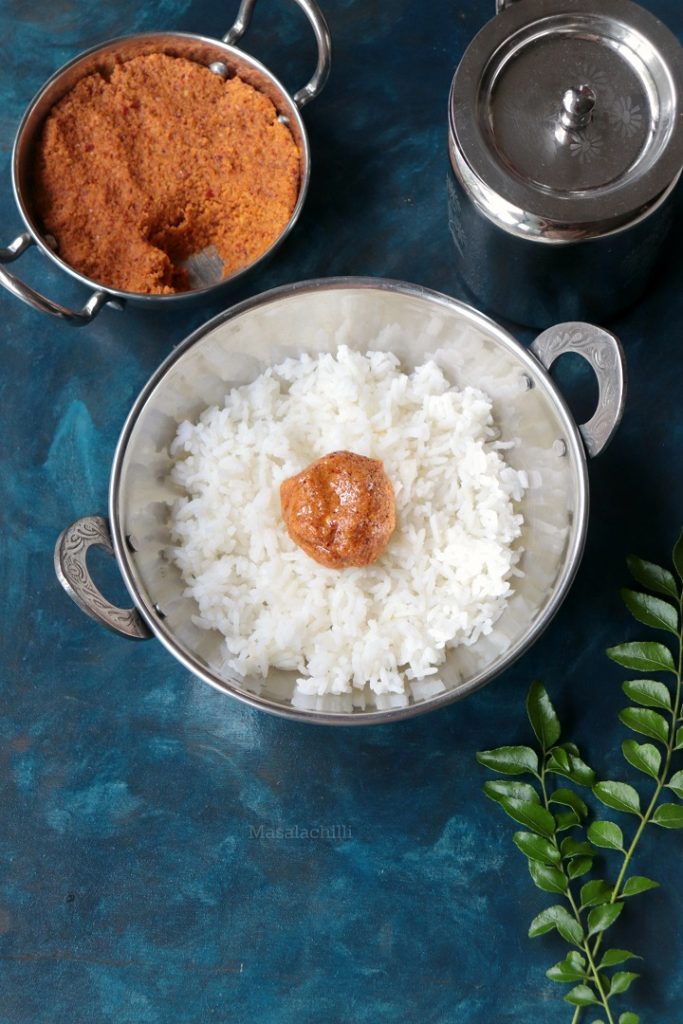
How to Make Vepampoo Thogayal with step by step pics
(1) Heat a pan, add oil, urad dal and chana dal along with dried red chillies.

(2) Saute the lentils or dal until they are golden brown in colour (maintain low to medium flame).

(3) Now add the grated coconut and mix well for a few seconds. Keep this aside in a plate to cool.

(4) In the same pan, heat some ghee and add the dried neem flowers. Saute on low flame until you get a nice aroma. Ensure the flame is low else the flowers will burn.

(5) Keep this aside for cooling.
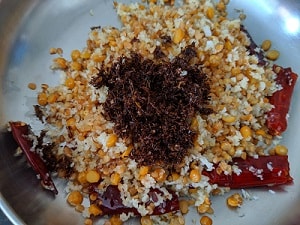
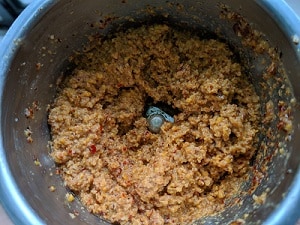
(6) Once the ingredients have cooled, add them to a mixer jar, add hing, salt to taste and jaggery. Use very little water for grinding.
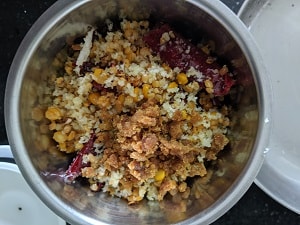
(7) Grind it into a coarse paste. Remove the contents in an air tight container and serve immediately or store in refrigerator to serve later.
Recipe Notes
- This chutney stays fresh in the refrigerator for atleast 48 hours. It has fresh coconut so I would recommend you use it as early as possible.
- This chutney not only pairs well with rice but can be served with dosa, uttapam, idli and any breakfast dish. If serving for breakfast, you can add a little bit more water and grind.
- Hing is added to the recipe and I have also used cow ghee to saute the dried neem flowers. You can skip the hing for a gluten free version and replace ghee with oil for a vegan recipe.
South Indian Thogayal Recipes on the blog -
- Pudina Thogayal (Mint Chutney)
- Broccoli Stem Thogayal - Chutney made using the stem or stalks of broccoli which are usually discarded.
- Peerkangai Thol Chutney - Chutney made using Turai or Ridge Gourd Skin.
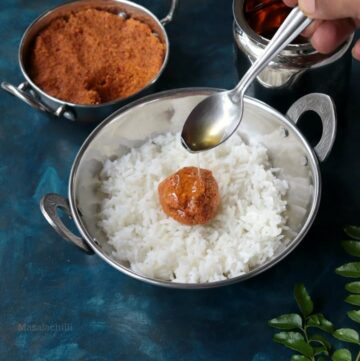
Vepampoo Thogayal (South Indian Dried Neem Flower Chutney)
Ingredients
- 1 tbsp Dried Neem Flower or Vepam Poo
- 2 tbsp Chana Dal, Bengal Gram Dal or Kadalai Paruppu
- 2 tbsp Urad Dal or Ulutham paruppu
- 5 nos. Whole Dry Red Chillies
- 3 tbsp Freshly Grated Coconut
- 2 tsp Oil
- 1/2 tsp Ghee or clarified butter
- 1/4 tsp Hing or Asafoetida
- 1 tsp Jaggery
- Salt to taste
- Water as required to grind the chutney
Instructions
- Heat a pan, add oil, urad dal and chana dal along with dried red chillies.
- Saute the lentils or dal until they are golden brown in colour (maintain low to medium flame).
- Now add the grated coconut and mix well for a few seconds. Keep this aside in a plate to cool.
- In the same pan, heat some ghee and add the dried neem flowers. Saute on low flame until you get a nice aroma. Ensure the flame is low else the flowers will burn.
- Keep this aside for cooling.
- Once the ingredients have cooled, add them to a mixer jar, add hing, salt to taste and jaggery. Use very little water for grinding.
- Grind it into a coarse paste. Remove the contents in an air tight container and serve immediately or store in refrigerator to serve later.
Notes
- This chutney stays fresh in the refrigerator for atleast 48 hours. It has fresh coconut so I would recommend you use it as early as possible.
- This chutney not only pairs well with rice but can be served with dosa, uttapam, idli and any breakfast dish. If serving for breakfast, you can add a little bit more water and grind.
- Hing is added to the recipe and I have also used cow ghee to saute the dried neem flowers. You can skip the hing for a gluten free version and replace ghee with oil for a vegan recipe.
Taking this recipe to the A to Z challenge this month wherein we choose to cook with key ingredients Alphabetically. This month it was time for Alphabet ‘N’. I chose my key ingredient ‘Neem Flower’ to make this South Indian Chutney.

Tried this recipe? Share it with us! Take a picture and share it via email on [email protected] or you could TAG US on any of our social media handles – INSTAGRAM, TWITTER, FACEBOOK PAGE AND PINTEREST.
Help us Grow! Share the recipe with your family and friends.. Encourage everyone around you to cook at home.
You can also subscribe to our website to receive all the delicious recipes in your mail box.
We will be back again with yet another exciting recipe .. Until then, stay healthy and happy!
Vidya Narayan
Thogayal and podi are always my choice of food on lazy days. Loved the colour of the thogayal and I would like to have it with hot rice.
I agree Niranjana, thank you.
I would have really loved to taste that chutney, dunk an idli into it... Neem flower is not something I have tried, but that surely sounds like a powerhouse of nutrients...
I hope you like it Rafee. Thank you so much. I would highly recommend this particular chutney for Rice than Idlis because its slightly bitter in taste.
I have never tasted this chutney . It is very healthy for sure. Would love to make it if I get these flowers. BTW where did you get the neem flowers in Mumbai. Rice, ghee and such pachadis are BLISS.
Thank you so much. I have mentioned in the post that these flowers are sun dried at home and frozen for use.
Our traditional cuisine is so full of recipes that have curative properties. I quite relish the bitter taste of the neem flowers and am sure I will enjoy this chutney very much.
Thank you Aruna
What a lovely recipe! I can imagine the flavours of this chutney, with the jaggery, lentils and neem flowers going in. I love adding neem flowers to my food every now and then, and this sounds like a wonderful way to do it!
Thank you.
Saving this recipe to try Vidya. I think 1 tablespoon neem flower with coconut and other ingredients should not be much bitter but it must be flavorful and delicious with hot steamed rice and ghee. You know in lunch we always start with something bitter dish like different types of karela dishes, sukto etc. And then dal curry and other dishes. This thogayal is perfect to start a meal. Loved this wonderful recipe. Never used neem flower. Now I will surely try it.
Oh yes, I am aware of the tradition where you eat bitter food first and then followed by other dishes. Neem is quite a great way to detox your system. I am glad I dried some batch at home last year, its quite useful this time. Thank you so much.
thogayal with vepampoo is so new to me.. the rustic taste of this thogayal with nallennai on hot rice is a dream come true ! bookmarking to try ! looks like we have had quite a few vepampoo dishes this month !
Thank you so much.
I've not as yet used neem flowers in my cooking. However, that does not mean I'm not willing to try out simple recipes like this vepampoo thogayal. A balance of sweetness and bitterness, that I don't mind. Intriguing that such sweet smelling flowers taste bitter.
Thank you so much and I hope you like it, when you try.
We make a chutney with tender neem leaves on Gudhi padwa. Never tried anything with neem flowers though. Now, after reading your post, even I will try sun-drying the flowers next year. Thanks for such a healthy share .
I completely agree wth you Vidya that good things are to be enjoyed repeatedly and why not when it comes with so many health benefits . This is one of the easiest dishes to enjoy the health benefits of neem flowers. I would love to mix this with hot rice and ghee or enjoy it as an accompaniment with dosas.
Thank you. Hope you enjoy making this at home.
Neem flower is something that I never knew is a part of South Indian cuisine. Thogayal sounds flavourful though little bitter as you mentioned but I’m sure it must have tasted awesome with rice and a dollop of ghee.
Thank you
Wow, never thought that Neem flowers can also be used in cooking. Such a wonderful recipe, full of nutrition and flavors. I am in love with those small kadhais. Awesome click as always ?
This recipe sounds so intriguing! I’ve never had anything like it before but I’m keen to experiment. Thanks so much for sharing not only your gorgeous recipe and photos but the whole experience of the dish as well. ?
Neem tree is a blessing for us. Every part of the tree can be used in one or the other useful ways.. Never used neem flowers in my cooking, but now I definitely want to try after seeing your rasam and this chutney recipe.. hopefully soon when I am in India I get to try both of your recipes.
So tempting and healthy thogayal with the goodness of neem flowers. I have tried using neem flowers in rasam long back but this post reminds me to start including it again. . Thogayal with rasam is enough to enjoy complete meal.
Now vepampoo is one ingredient I am going to keep my eyes peeled for. This thogayal is surely one I want to try when I get some. I love the colour of the thogayal here, usually, mine are a bit more yellowish. What chillies do you use?
For colour, you can opt for Byadagi or Kashmiri whole red chillies. Thanks.
Vepampoo Thogayal here seems to be a wonderful recipes. Prepared with lentils and dried neem flowers sounds so healthy and flavorful. As I always store neem flowers in dried form, so will make this sometime