
A Coffee Plantation Tour that was memorable, informative and refreshing!

Coffee Plantation Tour at Club Mahindra Virajpet, Coorg
This is in continuation of Part 1 series of the Coorg Travel Diaries I have written and posted earlier. As mentioned in the blog post, this part of the experience deserves a special mention as I am a coffee lover.
Since almost 15 acres of land in Club Mahindra is still a coffee plantation, they have arranged a tour (paid tour) for members, who wish to know about coffee, experience the journey of coffee trees and the other spices, namely pepper growing in the vicinity etc. It is a 40 minute guided tour and conducted twice during the day.
We all know that South India is known for their coffee. Even though we South Indians enjoy our tea, our mornings are incomplete without the adrenaline pumping strong cup of filter kaapi.
Coffee production in India is dominated by the southern states like Karnataka, Kerala and Tamil Nadu. Out of which, Karnataka contributes 71% of the total production which makes Coorg, one of the largest coffee plantation hubs. Coffee plants don’t need direct sunlight and the height of the trees are under 5 ft and are constantly maintained that way so that they don’t expose themselves to the direct sunlight and that they become easier to harvest as well.
Coffee history goes way back. However, the original source was in Ethiopia from where it was brought to Arabia in the 15th century. In India, especially in Karnataka, coffee was brought (rather smuggled) in the 17th Century by Baba Budan Giri. The story goes, that Baba Budan Giri while returning from a pilgrimage to Mecca, smuggled 7 coffee beans by hiding them from Yemen to Mysore in India. He then planted them in the Chandragiri Hills which is now named as Baba Budan Giri Hills in Chikamangalur District. This led to the production and beginning of a booming industry in South India.
After planting the seeds in Karnataka, the same were later on planted over the years in Wayanad (Kerala) and Nilgiris (Tamil Nadu). During the British rule, it gained a lot of importance as coffee was a major product for export, which flourished making South India a coffee hub.
There are 2 well known species of coffee (1) Arabica (2) Robusta. Out of the two varieties, Arabica and Robusta, the latter is widely grown and the common variety of coffee grown in the country.
The coffee in Coorg has a slight hint of spice. This is because of the inter cropping done with spices like cardamom, cinnamon, cloves, nutmeg and most importantly, pepper growing in the vicinity. The soil is slightly acidic in nature which works best for the coffee growth.
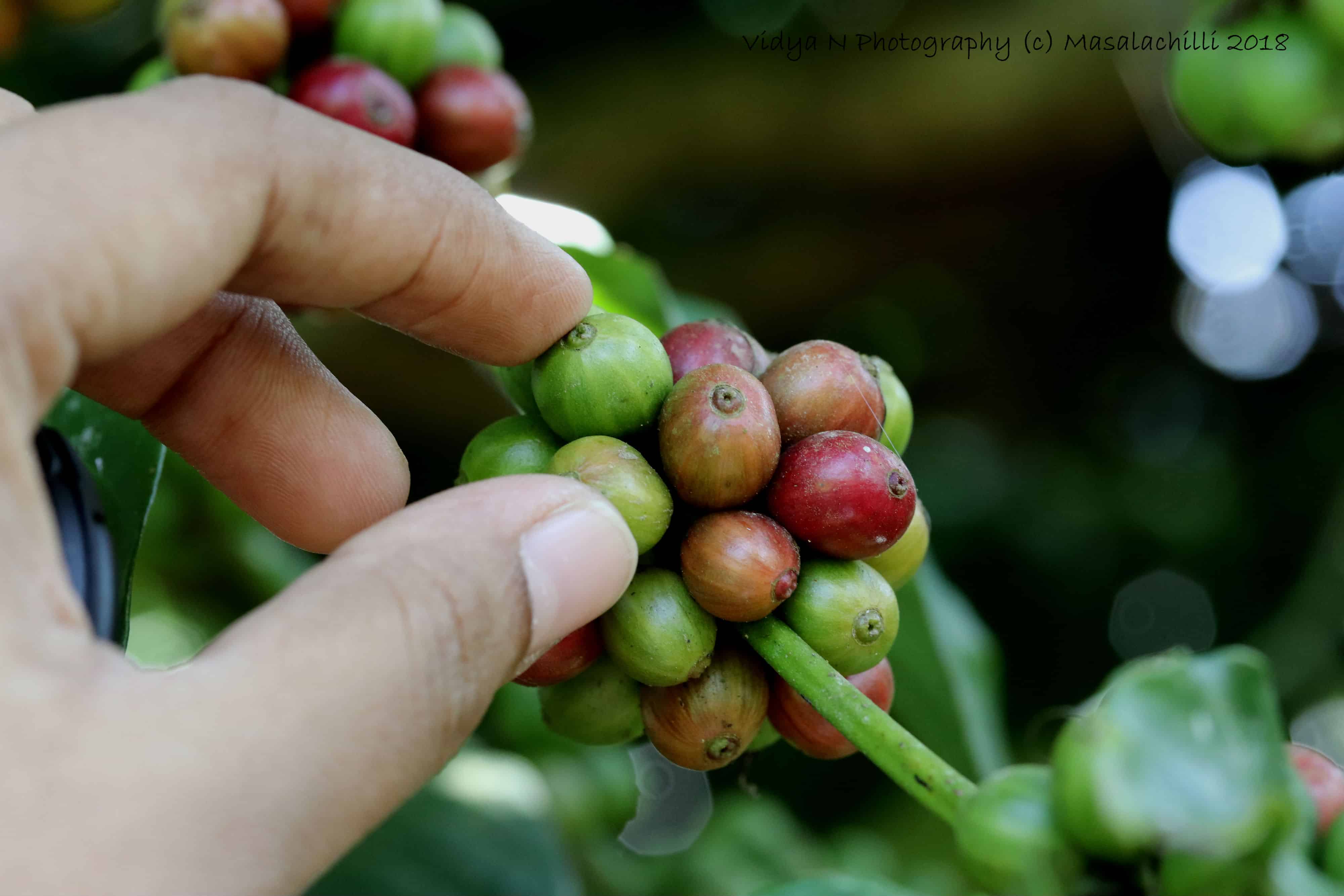
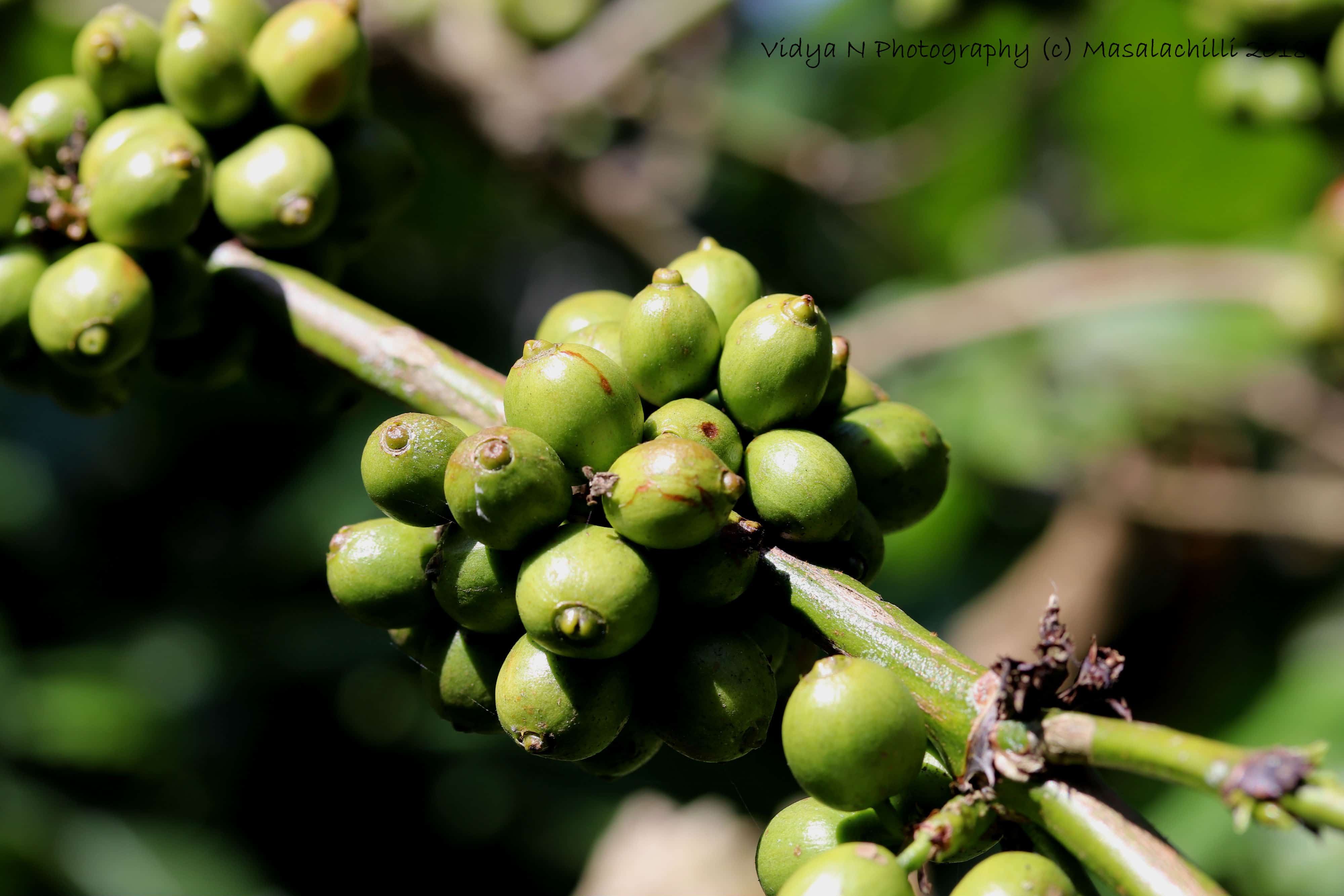
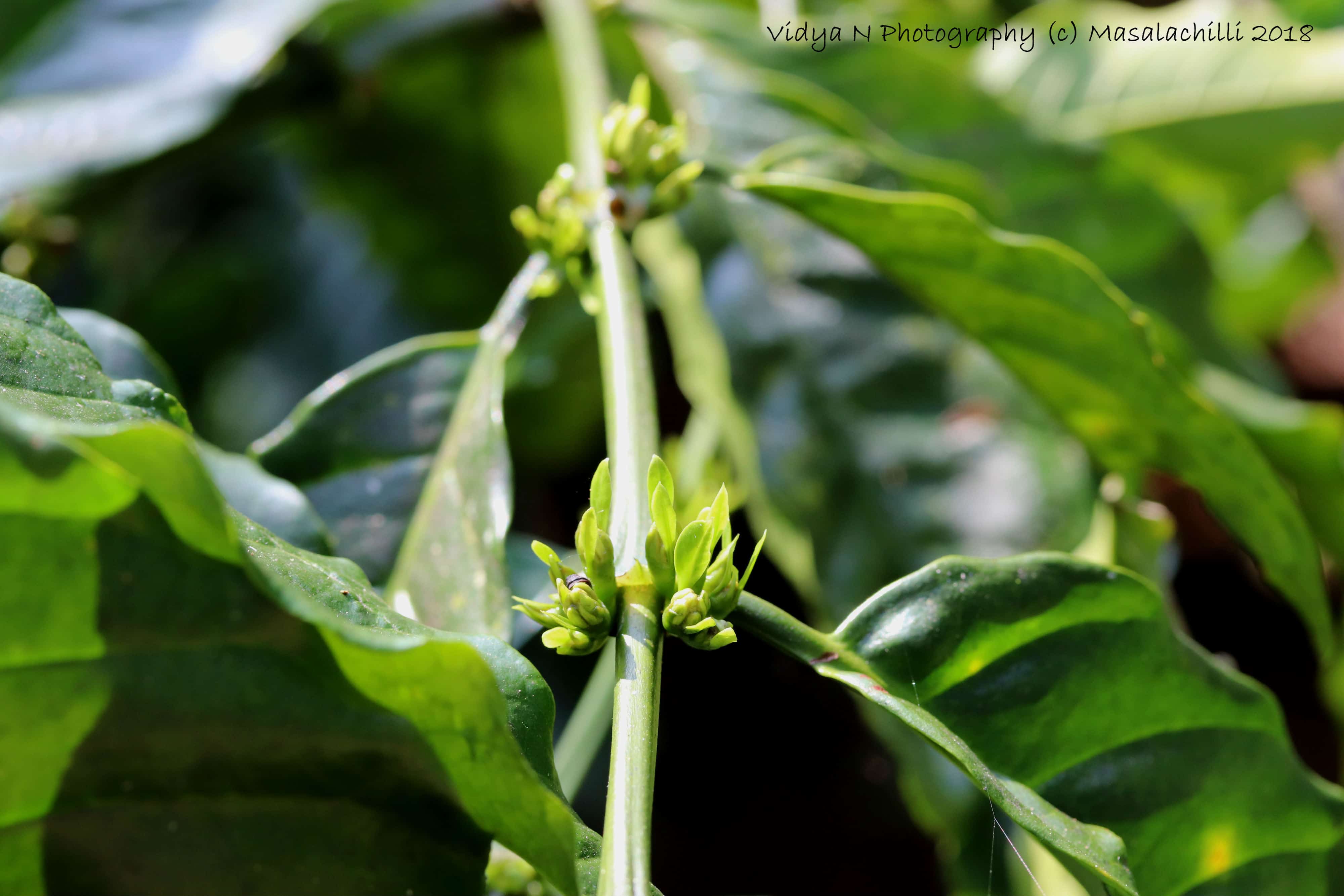
Three to 4 years after the coffee seeds are planted and the plant grows, the flowers appear. The coffee plantations are usually on a slope and when coffee plants bloom with white flowers, they look absolutely beautiful. They then mature into the seeds. The time period for the blooming of the flowers to the maturing of the fruit (the cherries turn from green to red) is about 6 to 7 months for the Arabica and 9 months for the Robusta. The fruits are hand picked when fully ripe that is reddish purple in colour. The leaves of the coffee plant are shiny, dark green and waxy. They are also a major source of providing oxygen. Each hectare of coffee produces about 86 lbs of oxygen per day.
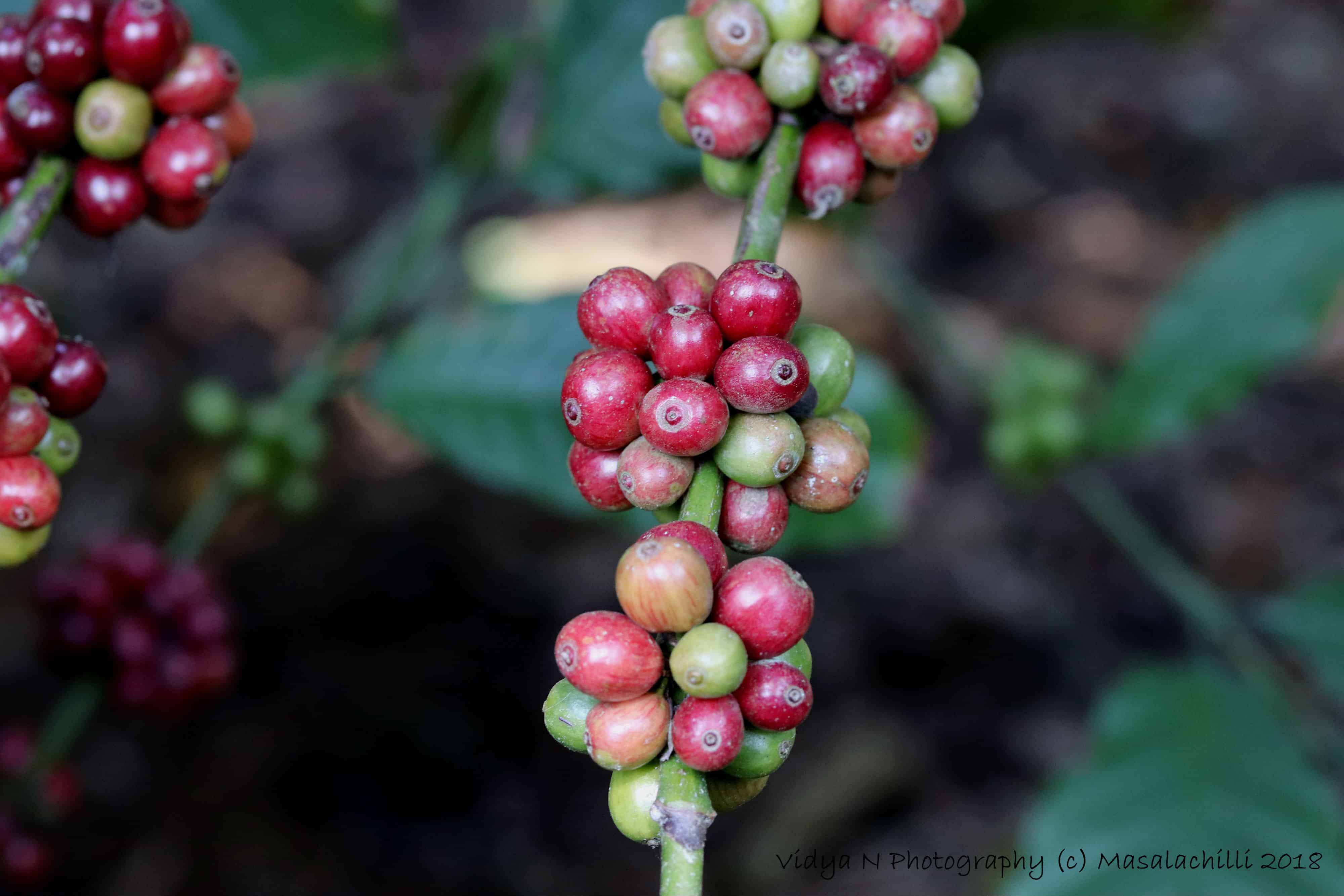 Climatic conditions with 23 Deg C with good to moderate rainfall during monsoons followed by a dry spell for a couple of months is ideal for coffee growth. Freezing temperatures are not considered good for coffee growth. With global warming in action, rainfall is slightly affected in these areas, owing to which, irrigation facilities help with the coffee growth and development.
The traditional method of processing coffee is drying the seeds in the sun followed by roasting and then powdering.
It was nice knowing about the history and most importantly to see the coffee plantation, up close and personal. The tour ended with a steaming cup of coffee (Robusta Blend) that gave us the much needed energy for the rest of the day.
With that, I complete the Coorg Diaries and will shortly come up with places to visit at another holiday destination, that we visited along with Coorg i.e. Wayanad. Stay tuned!
Vidya Narayan
Wow ur explanations make me recall my trip there.. beautiful place.
Glad to hear that dear. Thank you so much
??
Nice write up !! Even I m a huge fan of coffee.... it's really a warm hug for the brain?
Thanks dear and I really liked your description - Warm Hug. So Apt !!
I just loved ur write up dear!Join National Geographic and Discovery on Insta and post these lovely pics..:)..share these treasures with ppl abroad!
Thanks dear for such kind words. I have joined them both on insta. Hopefully many readers find this useful. A lot of time and effort has gone into compiling this and loved doing every bit of it.
Very interesting! Thanks for sharing. 🙂
Thank you so much
Wow...simply wow Vidya..lovely write up and amazing description..loved it !!
Thank you so much!