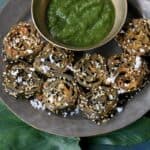
Alu Vadi Recipe / Patra / Arbi ke Pathrode
Alu Vadi Recipe is a traditional Maharashtrian Snack Recipe made with Arbi Leaves or Colocasia Leaves, chickpea flour or besan and basic Indian Spices.
Servings 4 people
Equipment
- Steamer
Ingredients
INGREDIENTS FOR THE VADI OR ROLLS
- 18 nos. Alu Leaves or Colocasia Leaves Refer Notes below on how to clean and prep the leaves
- 2 cups Besan or Chickpea Flour 1 cup is 250 ml measurement
- 1 tsp Turmeric Powder or Haldi Powder 1 tsp is 5 ml measurement
- 1 tsp Kashmiri Red Chilli Powder
- 1 tbsp Ginger and Green Chilli Paste 1 tbsp is 15 ml measurement
- 2 tbsp Tamarind Paste
- 1 tbsp Powdered Jaggery
- 1/4 tsp Hing or Asafoetida
- 1 tsp Salt to taste
- 3/4 cup Water + Extra 6 to 8 cups for steaming the vadi's Approx quantity suggested
FOR TEMPERING
- 2 tbsp Oil
- 3 tsp Sesame Seeds
- 1 & 1/2 tsp Mustard Seeds
- A pinch of hing or asafoetida
- 1 & 1/2 tbsp Freshly Grated Coconut
Instructions
- Follow the steps of cutting and cleaning the leaves (Refer Notes Below and the main blog post for pictorial steps)
- Prepare the steamer by boiling some water and greasing the steamer plate with few drops of oil. It will prevent the leaves from sticking to the plate after steaming.
- Now take a clean dry glass bowl and sift the besan or chickpea flour.
- Add all the ingredients – turmeric powder, Kashmiri red chilli powder, ginger and green chilli paste, tamarind paste, jaggery, hing and salt to taste.
- Mix this well using a whisk. Now add water slowly to make a thick batter.
- Now place a leaf on the kitchen counter or a wooden board and apply the batter using your hands.
- Now place another leaf on top (upside down) and repeat the process of applying the batter.
- Repeat the process for all the 6 pieces. Now fold the edges (it will stick due to the batter) and then slowly roll them into a tight log.
- Follow this method for the remaining set of alu leaves and place all the 3 logs for steaming on to the greased plate.
- Steam the leaves for atleast 15 to 20 minutes on medium heat. Once they have steamed, you will notice the chickpea batter has thickened and sort of stuck to the leaves. The leaf will also be dark in colour.
- Allow the logs to cool completely before slicing.
- Once the vadis are cooled, cut them into equal slices.
- Now heat a pan, add oil, sesame seeds, mustard seeds and hing (asafoetida).
- Add the cooked and sliced pieces of alu vadi and toss them gently. Allow them to cook for a couple of minutes on the pan before serving them immediately. Sprinkle some grated coconut.
Notes
How to clean and cut Alu chi Pan or Colocasia leaves?
- Once you bring the alu leaves home, give it a good wash and gently remove all the mud particles.
- Pat dry each leaf with a kitchen towel.
- First cut the long stem, turn the leaf and remove the thick veins (purple in colour) with a sharp knife. This skill needs some practice. Be gentle not to tear the leaves during the process.
- This is done to flatten the leaf so that it can be placed one above the other, rolled easily and steamed.
- Now follow this method for each leaf and keep them aside until you make the batter for coating the leaf.
- Allow the steamed vadi’s to cool completely before slicing them else they will break and not hold shape.
- These vadi’s can be pan fried and a tempering of mustard and sesame seeds can be added on top. For pan frying – heat oil in a pan and pan fry these until the crisp up on both sides.
- For deep frying the vadis – heat some oil and dip the vadi’s in hot oil. Fry until they are golden brown in colour. You can add a tempering of sesame and mustard seeds after they are fried too.
- You can add finely chopped coriander leaves as garnish.